
 Mono Roso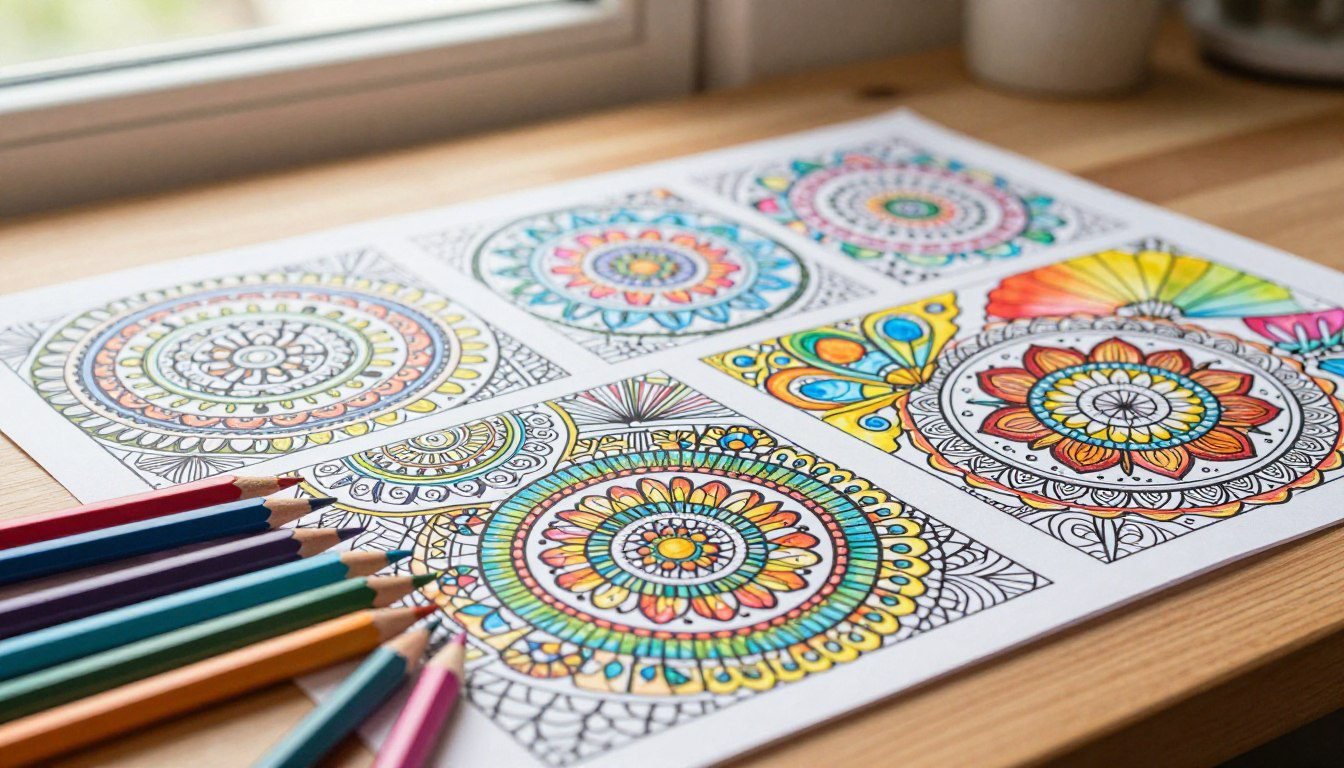
One quiet evening, you sit at your kitchen table with a Prismacolor pencil and a complex adult coloring page from Johanna Basford. The lamp casts a warm circle of light. Your first stroke of color turns the page into something artistic and calming.
This article teaches five easy art skills to make your coloring pages look amazing. You’ll learn about color theory, shading, line work, composition, and texture. These skills are easy to use with common tools like colored pencils and markers.
Expect quick lessons and simple techniques to use on any page. You’ll get tips, tool suggestions, and exercises that mix creativity with mindfulness. The aim is to improve your coloring through focused practice, keeping it relaxing and fulfilling.
Key Takeaways
- Five focused art skills that elevate Coloring pages: color, shading, line work, composition, and texture.
- The techniques are practical and use common materials such as colored pencils and markers.
- Skills support both Stress relief and deliberate creative expression.
- Improvement comes from mindful repetition and short, regular practice sessions.
- Each subsequent section provides quick techniques, tips, and exercises you can apply right away.
Understand color theory for richer coloring pages.
Start with a quick primer on color theory for your coloring pages. Learn the color wheel basics: primary colors (red, blue, yellow), secondary colors (green, orange, purple), and tertiary colors. Notice the difference between warm and cool hues and the three color attributes: hue, saturation, and value. These basics will sharpen your art skills and make your adult coloring projects look intentional.
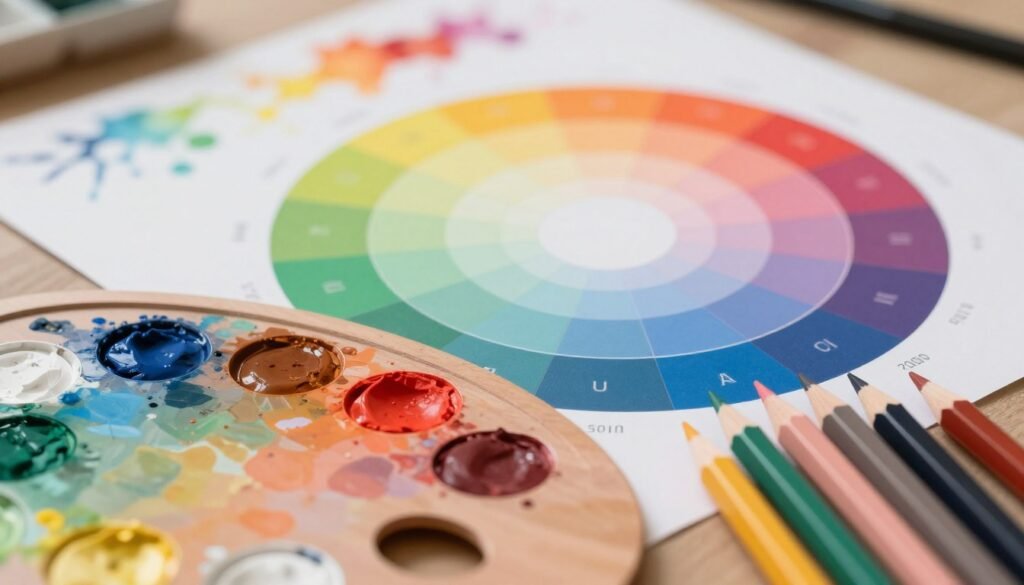
Basic color wheel concepts you can use right away
Use simple rules for reliable results. Try analogous palettes for calm, unified pages. For a pop, pair complementary colors like blue and orange. When mixing, layer cool blue over warm yellow to create green without streaks.
If a tone looks too strong, desaturate it by glazing a touch of its complement for subtle shading.
Choosing harmonious palettes for adult coloring designs
Limit your palette to three to five colors plus neutrals to avoid decision fatigue and maintain harmony. Pick a dominant color, an accent, and supporting tones. Use tools like Adobe Color or Coolors to test schemes and save them for repeatable results.
This approach supports creative expression and streamlines your practice. You’ll spend more time coloring and less time choosing.
Using contrast and complementary colors to create focal points
Create focal points with color contrasts that guide the eye. Use complementary colors for vibrancy, like a warm orange bloom against a cool blue background. Use value contrast by placing a light subject against a darker surround to lift the main shape.
Keep focal areas slightly more saturated and detailed while muting backgrounds. This way, your viewer notices the intended point of interest first.
Try three short exercises: build a calm analogous palette, a bold complementary scheme, and a muted monochrome set. Apply each to the same page and note how mood and perceived mastery change. These practices build practical art skills, reduce stress during sessions, and let your creative expression grow with every page you finish.
Master shading and blending techniques for a polished look
Shading techniques bring your coloring pages to life. Choose a light source, such as the top-left, to guide your shadows and highlights. This choice adds depth to your work.
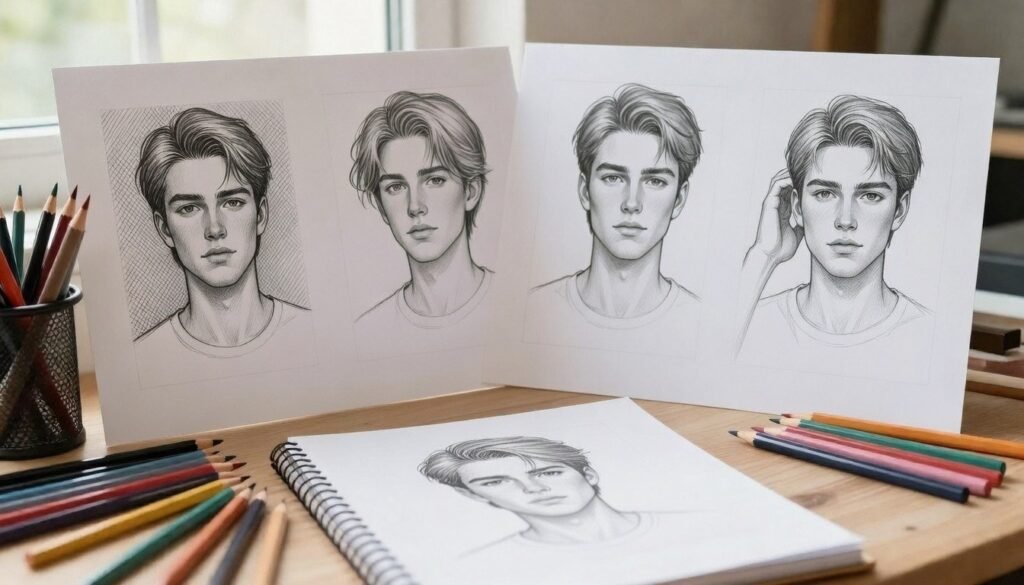
Directional shading suggests form. Use curved strokes for spheres and long strokes for cylinders. Start with light strokes and build up gradually. Avoid pressing too hard to allow for smooth transitions.
Layering and burnishing are key with colored pencils. Build up light layers for color and tone. Use a light pencil or burnishing tool for a glossy finish. High-quality pencils like Prismacolor Premier and Faber-Castell Polychromos work best.
Blending tools change your work. A paper stump or tortillon is great for subtle blending. Colorless blender pens work with alcohol-based markers. Solvents like OMS dissolve pencil binders for painterly blends, but work in a well-ventilated area.
- Pros of blending stumps: precise, no fumes, easy to control.
- Pros of solvents: smooth, painterly transitions with less layering.
- Cons of solvents: they require ventilation and can damage thin paper if overused.
- Cons of colorless blender markers: costly, limited to compatible media.
Practice with drills to improve. Create a value scale and sketch a sphere. These exercises sharpen your skills and boost confidence.
Remember safety and materials. Test techniques on scrap before using them on a final page. Work safely with solvents and store them properly. Small habits protect your work and allow for richer effects.
Improve line work and edge control to define shapes
Your line work gives structure to every coloring page. Strong, confident lines define shapes and make your colors read clearly. Try to keep the printed lines when you can. Enhance them selectively to keep a professional finish without re-inking the whole page.
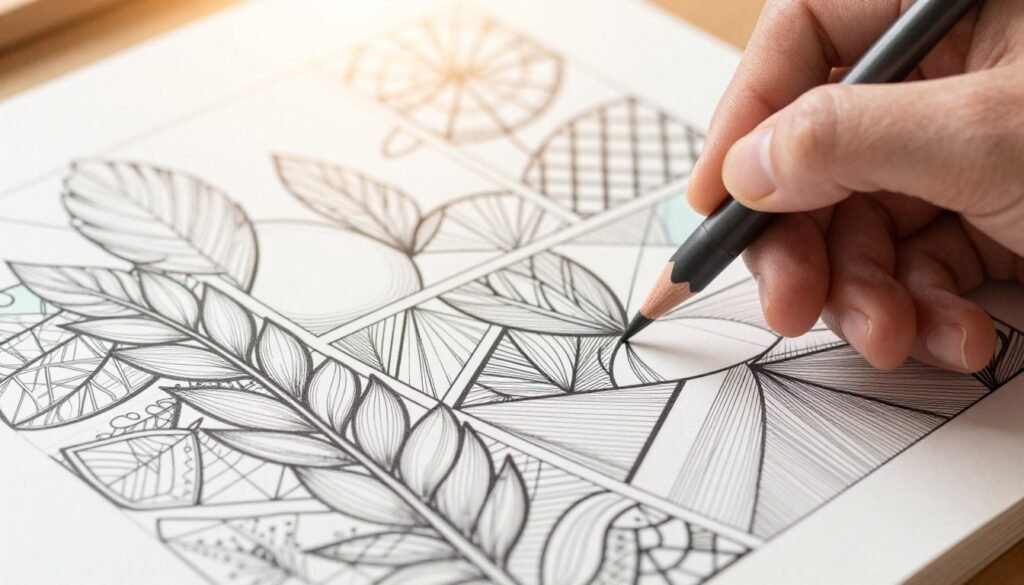
Using varied pressure for dynamic outlines
Vary pressure to create dynamic outlines that suggest depth and hierarchy. Press lightly for interior edges where subtle transitions are needed. Increase pressure slightly on outer contours to frame shapes and guide the eye. Use a sharp pencil like Staedtler or a blunter point for broader strokes to change weight without changing tools.
Refining small details without overworking your page
Fine details lift a page from simple to striking. Use Sakura Pigma Micron pens or a well-sharpened colored pencil for veins, tiny textures, and crisp edges. Limit reworking in dense areas. Excessive blending can flatten texture and damage the paper’s tooth, leaving colors muddy.
Tips for steady hand techniques and corrections
Steady hands improve every stroke. Brace your forearm on the table and breathe steadily while you work. Use a mahl stick or steadying tool when you need extra support. Try simple crosshatch, straight lines, continuous curves, and crosshatch grids to train control.
When you need to fix small mistakes, use gentle methods. Lift excess wax with a white eraser or a kneaded eraser for delicate removal. Mask tiny highlights with a Sakura Gelly Roll white gel pen to create crisp, light spots. For marker bleed, a small touch of white gouache can tidy edges without redoing a section. Keep fineliners fresh and pencils sharp with a quality sharpener like KUM to maintain consistent edge control.
These focused practices improve your art skills and give adult coloring pages a refined look. Apply these coloring tips regularly to develop reliable line work and dynamic outlines that make your pieces sing.
Composition and focal points to guide the viewer’s eye
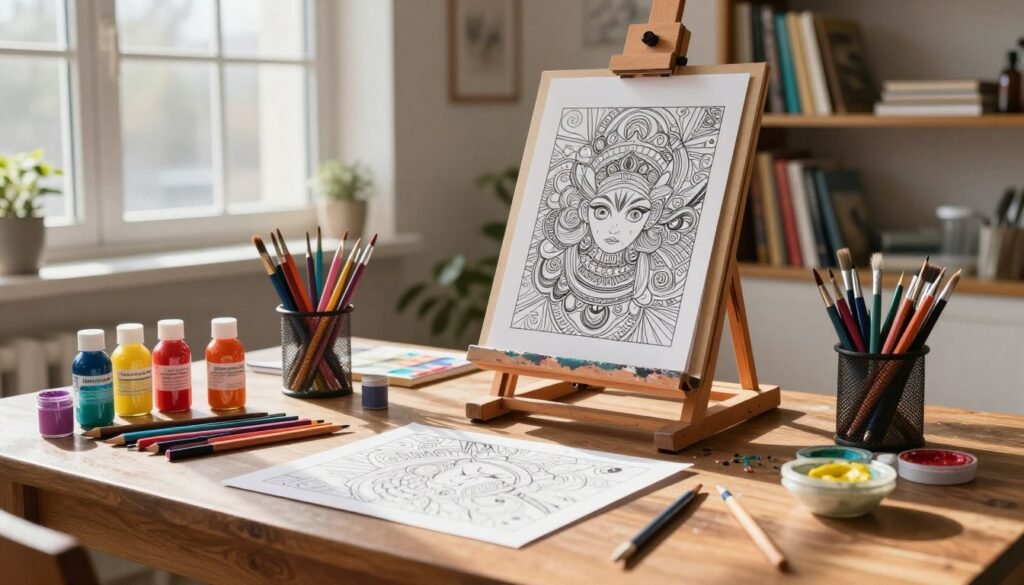
Your choices in arranging elements shape the story of a coloring page. Good composition turns a simple sheet into a scene that draws the eye. It creates a mood and shows off your art skills.
Arranging elements for balanced adult coloring pages
Put important motifs off-center to create tension and flow. Use the rule of thirds to place blooms, figures, or ornaments naturally. Add visual weight with deeper values or richer saturation on one side, then balance with calmer, lighter zones on the other.
Creating strong focal points with value and color
Make a focal element stand out by boosting contrast. A brighter hue or darker value will draw the eye faster than detail alone. Simplify surrounding shapes and save the most detailed work for the spot you want noticed.
Negative space and breathing room in complex designs
Leave areas of white or soft neutral color to prevent visual fatigue. Use negative space as a design tool: it gives the eye rest, frames focal points, and enhances balance. Gentle background gradients or muted textures can support the subject without competing for attention.
Practice exercises to sharpen composition
- Crop a printout into different frames to see how focal points shift.
- Recolor the same page three ways, each time highlighting a different area.
- Mask off busy sections and practice adding negative space to improve balance.
These simple drills build your sense of composition and teach you to place focal points intentionally. With practice, your adult coloring and coloring pages will feel more deliberate, confident, and visually satisfying as your art skills evolve.
Texture techniques to add realism and interest
Good texture makes your coloring pages feel alive. You can imply surfaces with simple mark-making. This enhances tactile feedback and improves your art skills for adult coloring projects.
Simulating natural textures: hair, fabric, and foliage
For hair texture, use directional layered strokes that follow the flow. Alternate light and dark strands and lift tiny highlights with a sharp white or pale pencil. This gives the illusion of shine without heavy blending.
To suggest fabric shading, mark short directional lines across folds. Use cross-contour shading to show drape. Vary the value to imply the weave or the way light hits different planes.
When you color foliage, change stroke length and pressure. Mix stippling with short strokes for leaf edges. Add fine mid-tone veins with crosshatching to sell the form.
Using pattecrosshatching for tactile effects
Controlled crosshatching increases perceived density and shadow. Place hatch marks to follow the form so the surface reads as curved or flat. Small patterns—dots, scales, or cross-strokes—suggest stone, wood grain, or fur.
Vary spacing and angle to tune the tactile effects. Tight, dense hatches read as heavy shadow. Loose, airy marks read as texture with light washing.
Combining textures with color for richer results
Layer textured marks with colcrosshatchingurfaces. Try a warm brown base, darker crosshatching, then a green glaze for a mossy stone look. Use temperature and saturation to separate materials: cool grays for metal, warm browns for wood.
Practice by choosing one subject—hair, fabric, or foliage—and apply three texture techniques. Photograph your studies to build a small reference library. Repeating this exercise sharpens your art skills and improves results in adult coloring pages.
- Pick oncrosshatchingry directional strokes, stippling, and crosshatching.
- Compare variations in color temperature to emphasize material differences.
- Create quick mini-studies to expand your toolbox of tactile effects.
Art skills, Coloring pages, Adult coloring, Stress relief, Masterpiece.
Make your coloring pages special by using color theory and shading. This turns them into a real masterpiece. Clear lines help guide the viewer’s eye.
Work on one skill at a time to see progress. Try shading, texture, and color experiments each week. Keep a log and take photos to track your growth.
How these concepts work together to transform your practice
- Color choices set the mood and harmony.
- Shading and blending give objects depth.
- Line work and edge control sharpen details.
- Composition directs the eye to focal points.
- Texture adds tactile interest and realism.
Turning a relaxation habit into a visible improvement
- Pick one skill per session and set a 30–45 minute goal.
- Do focused drills, then apply the result to a coloring page.
- Photograph progress and note what changed in your practice log.
Using mindful coloring as both an art practice and a stress relief
Adult coloring can help with stress and anxiety. Choose whether you want to practice or relax. If it’s for relaxation, focus on the process and enjoy it.
Celebrate your small victories. Show off your work online and ask for feedback. Use tips like simple palettes or textures to keep it fun and rewarding.
Practical coloring tips, tools, and materials to get started
Start with a short checklist to build confidence. Choose the right tools and materials to improve your art skills quickly. Keep what works well and set up a calm space for regular practice.
Recommended pencils, markers, and paper for best results
For soft, rich colors, use Prismacolor Premier pencils. Faber-Castell Polychromos are great for fine details and less wax bloom. Copic or Blick Studio markers are good for smooth blending.
Choose paper that’s 90–140 lb (200–300 gsm) or marker paper to avoid bleed. Finch and Strathmore pads work well for repeated use.
Affordable tools for practicing the five art skills
- Budget colored pencils: Prismacolor Scholar or Arteza for good color without high cost.
- Economy markers: Ohuhu markers offer decent blending for practice sessions.
- Paper alternative: Canson mixed-media pads strike a balance between price and performance.
- Buy single pencils to create a custom palette affordably.
Use practical accessories like blending stumps and a quality pencil sharpener. A kneaded eraser and a battery-powered eraser help with edges and small mistakes. For advanced blending, use mineral spirits carefully and follow safety rules.
Workspace setup to encourage focused creative expression
Use a daylight or full-spectrum lamp near 5000K for true colors. Arrange tools in trays or a pencil roll for easy access. Keep scrap paper and test swatches nearby for color checks.
Good ergonomics are key for steady handwork. Use a comfortable chair, wrist rest, and a flat or slightly angled drawing board. Calming music or short breathing tracks can help focus. A Pomodoro timer with 25-minute sessions can help you practice regularly.
Store supplies to keep them lasting longer. Keep markers horizontal, cap pencils or roll them, and wipe marker caps with a clean cloth. These steps help keep your tools in good condition while you improve your art skills.
Conclusion
By mastering five art skills, you can make your coloring pages truly special. These skills include color theory, shading, line work, composition, and texture. Each skill builds on the last, making your coloring sessions both relaxing and skill-building.
Start by focusing on one skill each week. Choose a coloring page you love to practice with. Use good tools like Prismacolor or Faber-Castell pencils, smooth paper, and a clean space. This way, you’ll make progress without losing the calm that coloring brings.
Remember, getting better takes time and effort. Keep practicing, and you’ll see your pages become more beautiful. Mix technique practice with fun coloring to grow your skills and find peace.