
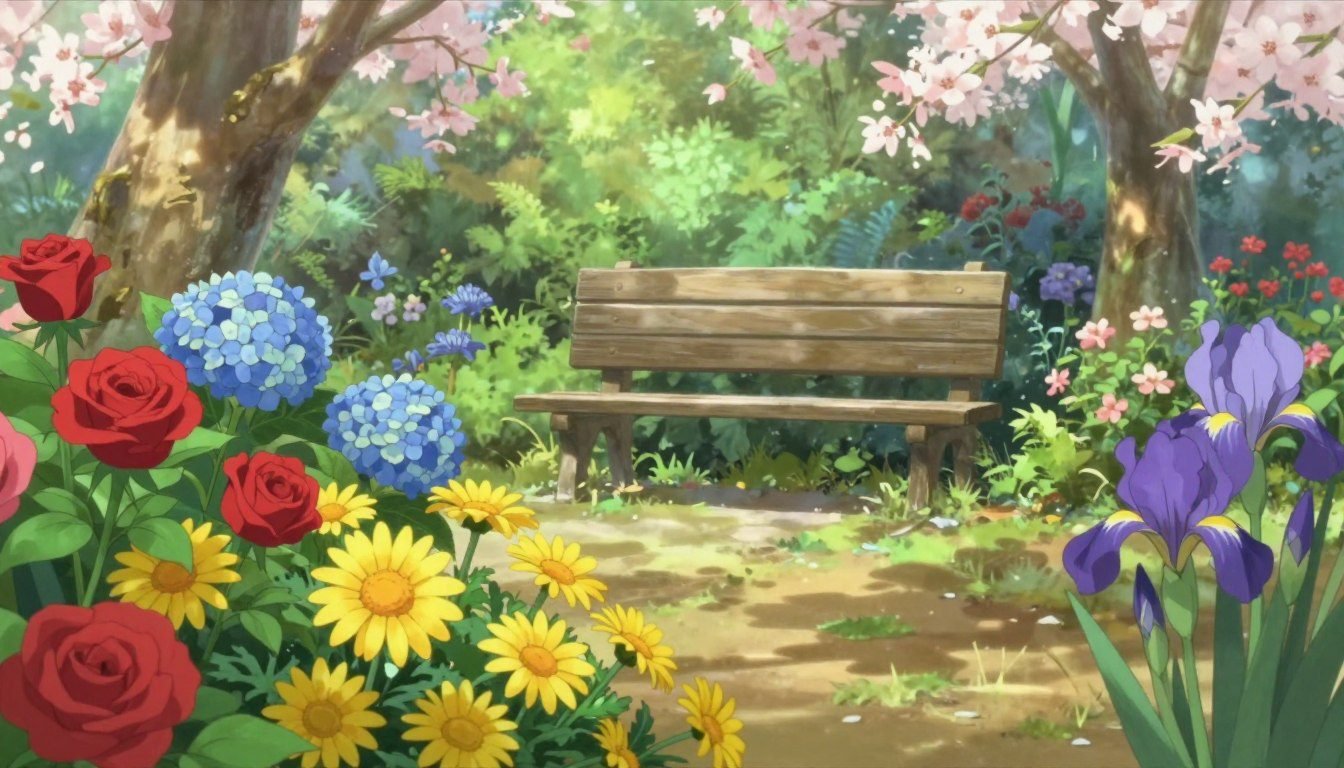
Imagine a man who takes great care of his backyard. His roses are a fiery red, and his lawn is a crisp green. Yet, inside, he feels empty.
The beauty in his garden seems to mock his own emptiness. He sees beauty but doesn’t feel it.
Is that pot of lavender on your windowsill just a pretty scent? Or is the neglected sunflower patch a simple oversight? What if that single white orchid on your desk is more than decor?
Your world speaks in a blooming dialect. Those floral choices are silent messages from your subconscious mood. They are clues you’ve been planting for yourself.
This isn’t about botany. It’s about the psychological secrets hidden in plain sight. It’s about how your environment whispers truths about your need for inner peace or creative energy.
Let’s learn to listen. Let’s move from passive observer to active decipherer. The key to aligning your outer world with your inner need for tranquility is already growing around you.
Key Takeaways
- Your living space, including your garden or plants, reflects your internal emotional state.
- The types of flowers you are drawn to are rarely random; they often reflect unspoken needs or feelings.
- By paying attention to these choices, you can uncover hidden layers of your current mood.
- Creating alignment between your environment and your emotional needs can directly foster a sense of peace and renewed energy.
- This understanding provides a practical, accessible tool for personal insight and intentional change.
- Even the smallest floral detail in your home can hold significant meaning worth exploring.
Your Blossoming Subconscious: More Than Just Pretty Petals
What if the flowers in your yard are more than just pretty? They might be messages from your subconscious. We often decorate our spaces with beauty, but rarely think about what it means.
This silent conversation is as old as time. Your garden or the flowers on your desk might be trying to tell you something. But have you forgotten how to listen?
The Secret Dialect of the Victorians
In the 19th century, flowers were more than just gifts. They were secret messages. This art, called floriography, was a way to express feelings without words.
Red roses meant love, and ivy showed loyalty. The way the flowers were arranged and given added meaning. It was a way to share true feelings in a time when words were limited.
They knew that natural beauty holds deep meanings that words can’t always convey.
Why We’re Still Drawn to Floral Meanings Today
So why do we find this old practice so appealing today? In our fast-paced world, we yearn for real, sensory experiences. A text message fades quickly, but the feel and smell of a flower last.
Our brains are hardwired to respond to nature’s colors and shapes. A bright yellow sunflower can make us feel hopeful. Lavender’s soft purple can calm us down.
To overlook the secrets of flowers is to miss out on a key way to understand ourselves. We surround ourselves with beauty but often forget to listen. Choosing a calm blue hydrangea over a bold red poppy might show your need for peace over passion.
The language of flowers is alive and well. The question is, are you ready to hear it?
Deciphering the Language of Flowers: A Mood-Based Guide
Your choice of flowers is not random. It shows your hidden desires and fears. This guide helps you understand that silent message. Look at the flower types you’ve planted or brought indoors. Their colors and forms are not just decor. They are clues.
1. Roses: A Spectrum of Sentiment
No flower speaks more languages than the rose. Its meaning changes with its color. Choosing one color sends a specific message, even to yourself.
Scarlet Red: Deep Passion or Hidden Stress?
A bouquet of red roses screams intensity. It traditionally means love. But in your garden, a red rose bush might whisper something else. Is it a deep passion for your work? Or is it a visual shout, a frantic splash of color against a backdrop of underlying stress?
Sunshine Yellow: Seeking Friendship and Joy
Yellow roses beam with friendship and joy. They are the social butterflies of the garden. But ask yourself: is this cheerful display a genuine reach for connection and light? Or is it a mask for a creeping sense of loneliness?
Pure White: A Desire for Peace or New Starts
White roses symbolize purity, peace, and new beginnings. They are a clean slate. Do you surround yourself with white blooms from a true place of calm? Or is it a subconscious wish to wipe everything away and start over?
2. Lavender: The Universal Symbol of Calm
Lavender is the quintessential emblem of relaxation. Its soft purple hue is visually soothing. Its scent is a direct line to the nervous system. Science shows that the aroma of lavender can lower heart rate. But its meaning goes deeper.
To cultivate lavender is to invite calm into your space actively. It’s a declaration that you need to find peace. It’s for the overstimulated mind craving quiet. This plant isn’t just pretty. It’s a therapeutic choice, a commitment to carving out moments of peace.
3. Sunflowers: Naturally Optimistic
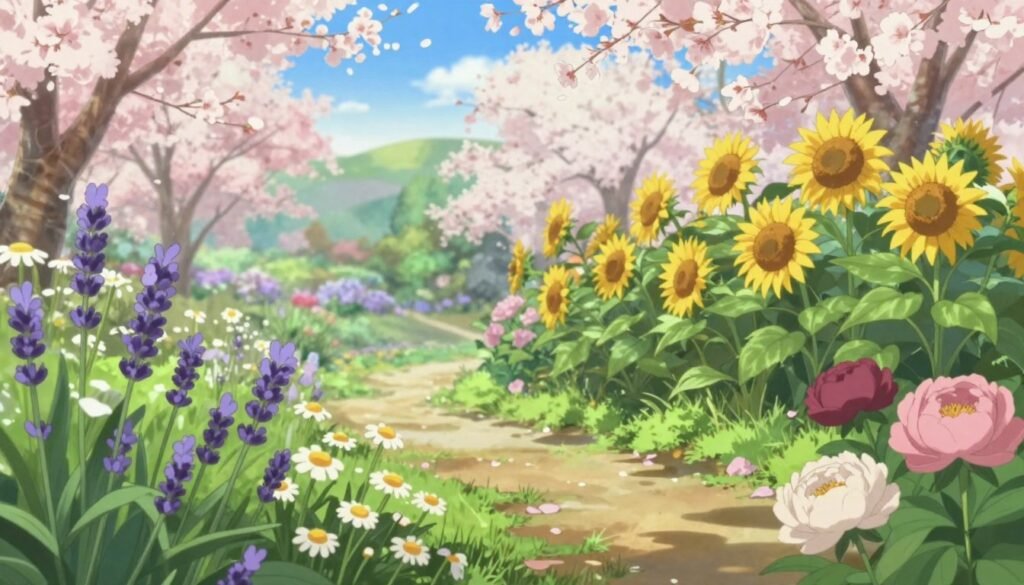
Sunflowers don’t just look like the sun. They follow it. This heliotropism is a daily lesson in orientation. A garden with sunflowers is a garden that chooses optimism. It’s a space that turns toward the light, literally and metaphorically.
For the creative feeling stuck, sunflowers are a powerful reminder. Growth requires turning your face toward what fuels you. They represent resilience and an unwavering search for positivity. They are the antithesis of burnout’s inward curl.
4. Forget-Me-Nots and Ivy: Longing and Attachment
This pair speaks to the heart’s clingier side. Delicate Forget-Me-Nots carry a fear of being forgotten. They often bloom for the creative who worries their work, or themselves, will fade into obscurity.
Ivy, with its tenacious grip, symbolizes attachment and fidelity. But it can also represent clinging to outdated projects, ideas, or relationships that no longer serve growth. Together, these plants ask: What are you holding onto too tightly? Is it a healthy fidelity, or a fear of letting go?
5. Chrysanthemums: Resilience and Authenticity
Chrysanthemums bloom in the fall, when other flowers fade. They are the late bloomers. They symbolize longevity, resilience, and joy in authenticity. Choosing these flower types often reflects a mature, hard-won sense of self.
They are for the person who has stopped comparing their timeline to others. The chrysanthemum doesn’t rush. It finds its strength and beauty in its own season. It’s a celebration of enduring through challenges and blooming true, on your own terms.
Rooted in Science: The Botany of Better Moods
Ever felt calm among flowers? It’s not just in your head. It’s a real change in your body. The beauty of petals meets the science of botany and nature therapy. This isn’t just a dream. It’s how plants affect your senses and body.
Horticulture Therapy and Stress Reduction
Horticulture therapy is a real practice. It uses gardening to help people. Tending to plants changes how we handle stress.
Research shows that gardening lowers cortisol, our stress hormone. It helps us focus on the moment. This makes us feel more grounded and calm.
This field shows that caring for plants also cares for us. It’s a mutual relationship of calm and care.
How Flower Colors Directly Influence Emotion
Color is more than just pretty. It sends signals to our bodies. Seeing a blue hydrangea does more than just please our eyes.
Cool colors like blue and purple calm us down. They slow our heart rate and make us feel relaxed. Warm colors like red and orange wake us up. They make us feel alive and alert.
Choosing colors for your garden affects your mood. It’s not just about looks. It’s about creating a space that supports your feelings all day.
The Scent Connection: Aromatherapy from Your Backyard
Smell is linked to memory and feelings. It goes straight to our emotional center. A scent like rosemary or gardenia does more than smell good.
It sends a message that can calm us or make us feel clear. Your garden is like a personal aromatherapy shop. You can choose scents for different times of day.
Planting for scent, like jasmine for evening or mint for morning, is powerful. It’s not just growing plants. It’s creating a space that improves the air we breathe.
The science is clear. Your garden is more than a pretty place. It’s a tool for healing and renewal.
Speaking Your Truth: Designing a Garden for Your Well-Being
Imagine creating an outdoor space that boosts your mental health. Learning about flower language is just the start. It’s time to use this knowledge to change your garden into a reflection of your inner peace.
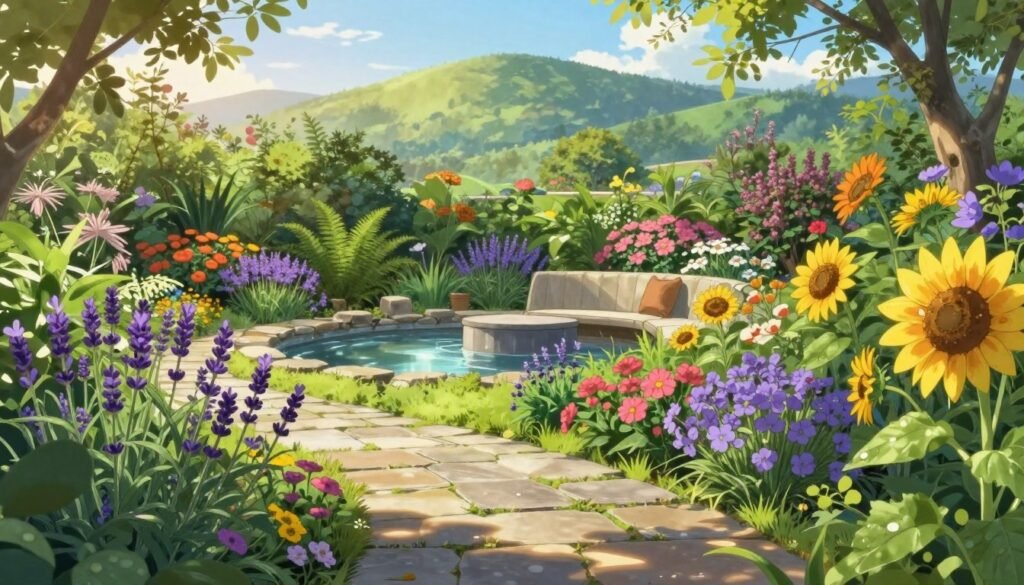
Select Your Blooms with Intention
Don’t pick plants randomly anymore. Choose them with a purpose. Each flower is a message to yourself, starting a new chapter in your garden’s story.
For the Anxious Mind: A Palette of Cool Blues and Purples
Surround yourself with calm when anxiety strikes. Plant hydrangeas, lavender, and salvias in cool colors. These colors calm your mind and slow your heart rate.
For Low Energy: Vibrant Reds, Oranges, and Yellows
Need a boost? Add vibrant colors to your space. Sunflowers, poppies, and zinnias in bold colors energize you. They lift your spirit and draw your gaze upward.
For Creative Blocks: Textural Variety and Soft Pastels
Stuck in a creative rut? Mix different textures and soft colors. Combine feathery grasses with soft flowers. This mix encourages your brain to explore new ideas.
Apply Relaxing Landscaping Principles
Good landscaping is like psychology in action. It’s not just about where you place plants. It’s about how the space feels when you’re in it.
- Embrace Curves: Sharp corners and straight lines feel formal. Gentle paths and rounded beds feel welcoming. They help you relax.
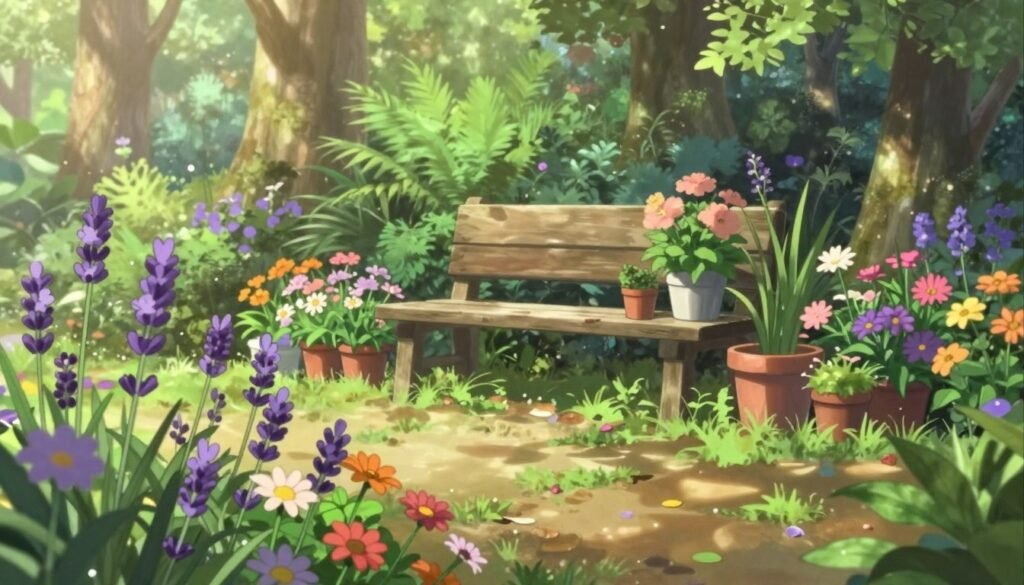
- Create Hidden Nooks: Design a cozy spot—a bench under a tree, a chair in tall grasses. It’s a place for quiet reflection.
- Keep Scale Manageable: A huge lawn can feel lonely. A crowded garden is overwhelming. Create small, thriving areas for a sense of control.
Incorporate Mindful Eco-Decor Elements
Every outdoor decor piece should engage your senses and support your well-being. Choose items that enhance your experience.
Look for a bench that encourages thought. Position it for the best light or breeze. A wind chime should have a soothing sound. A birdbath invites life and movement into your space.
This thoughtful approach to outdoor decor turns your garden into a sensory experience. The right landscaping and flowers give it voice. These elements make your garden a place you truly inhabit, not just visit.
Conclusion
Your garden is not just a picture. It’s a living, breathing conversation between you and the world. This journey started with a simple question: What does your space say about your mood?
Flowers carry deep meanings, from secret codes to modern psychology. Science shows their impact, linking color and scent to our feelings. The real magic is in creating, not just observing.
This is about more than just flowers. It’s about creating a world for your senses. Your garden’s environment, with its light, textures, scents, and colors, shapes your emotions. It talks to your subconscious every day.
So, look at your garden today. What’s it saying? Is it calm lavender or bold sunflower optimism? More importantly, what do you want it to say?
The change isn’t about a perfect garden. It’s about connecting with your space. Start with a small, meaningful choice. Pick a plant that speaks to your true needs. Listen, and let your environment respond.
