
 Mono Roso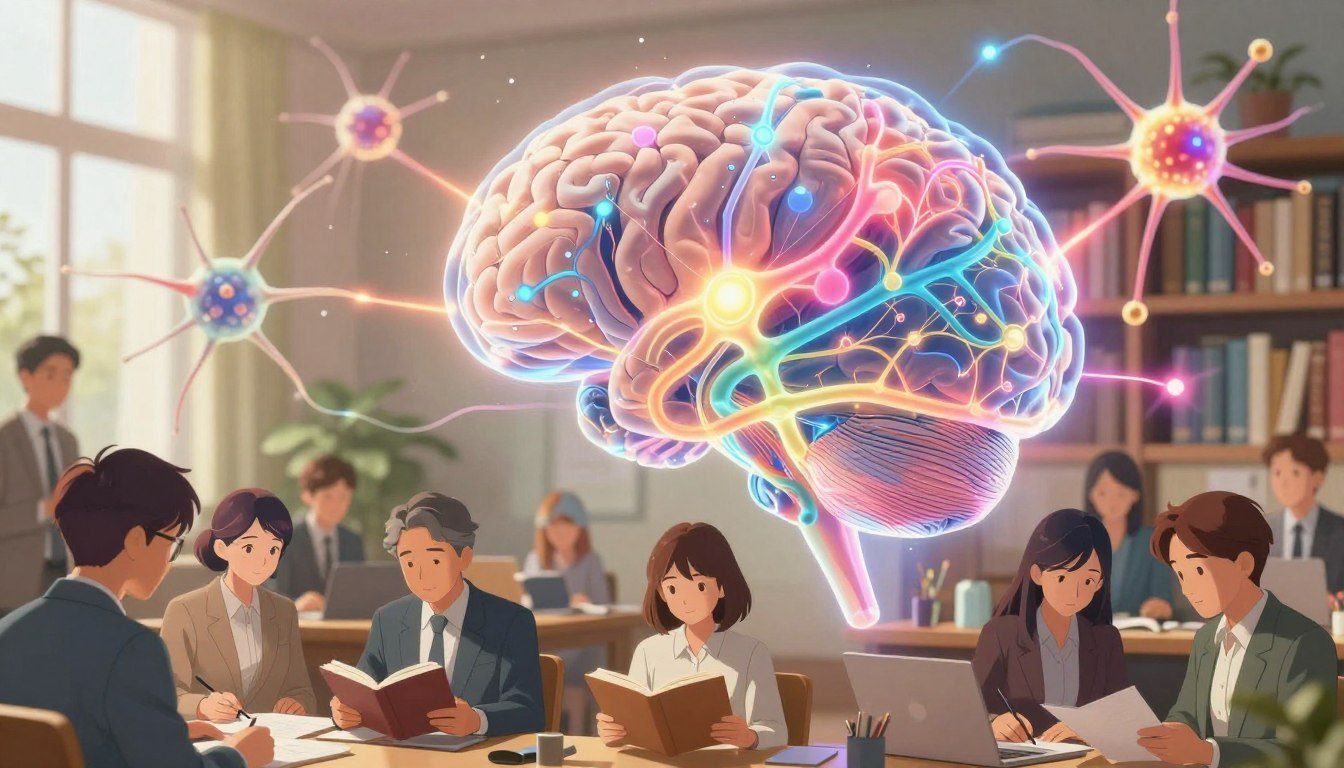
He stared at the blank page for the third hour. A writer, once fluent, now felt the gears of his mind grind to dust. The coffee was cold. The ideas were gone. This wasn’t a bad day; it was his new normal. A quiet fear whispered: Is this it? Has my mind reached its limit?
That fear is a lie. Dr. Andrew E. Budson of Harvard Medical School offers a liberating truth. He defines neuroplasticity as your mind’s fundamental capacity to learn, remember, and change. Your cognitive machinery isn’t fixed. It’s alive.
This means your brain’s ability is not a finished sculpture. It is wet clay, responsive to the pressure of your attention. Every experience, every new skill, every challenging thought leaves a mark. This is plasticity in action.
You possess this remarkable power throughout your life. Stagnation is a choice. Sharpness, creativity, and resilience are within reach. This guide is about the mechanics of that hope. It’s about moving from autopilot to authorship of your own mental future.
We will explore how to harness this innate brain ability change. You’ll discover actionable strategies to influence your brain health, ensuring it thrives on challenge and novelty. The science confirms you can reshape your cognitive landscape. Let’s begin.
Understanding Neuroplasticity: The Brain’s Adaptability
For decades, science believed the adult mind was hardwired and static, but that old story is now obsolete. Dr. Andrew E. Budson of Harvard Medical School clarifies this shift. He states that this plasticity is your mind’s fundamental capacity to learn, remember, and alter itself when circumstances demand.
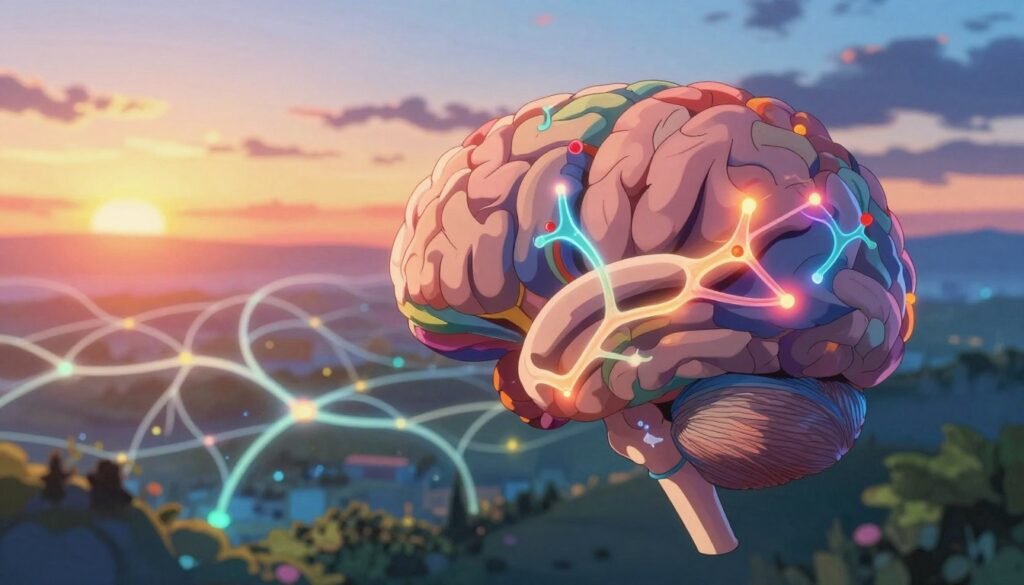
Defining Neuroplasticity and Brain Health
This is your inherent power to modify your own neural structure and function throughout your entire life—every experience you have, and every environment you encounter leaves a mark.
This dynamic process is central to learning. It is the very engine of your cognitive health.
Structural vs. Functional Changes in the Brain
Think of functional adaptability as a software update. It’s a shift in how your neural circuits operate when you tackle a new skill.
Structural change is the hardware upgrade. With repetition, your mind physically rewires. It builds stronger, more permanent connections.
This continuous ability to change allows you to adapt to complex challenges. By understanding these mechanisms, you gain the power to direct your own mental development consciously.
The Science Behind Neuroplasticity
Every time you struggle with a new idea, your mind isn’t failing—it’s literally rebuilding itself at a microscopic level. Three core biological processes drive this continuous renovation.
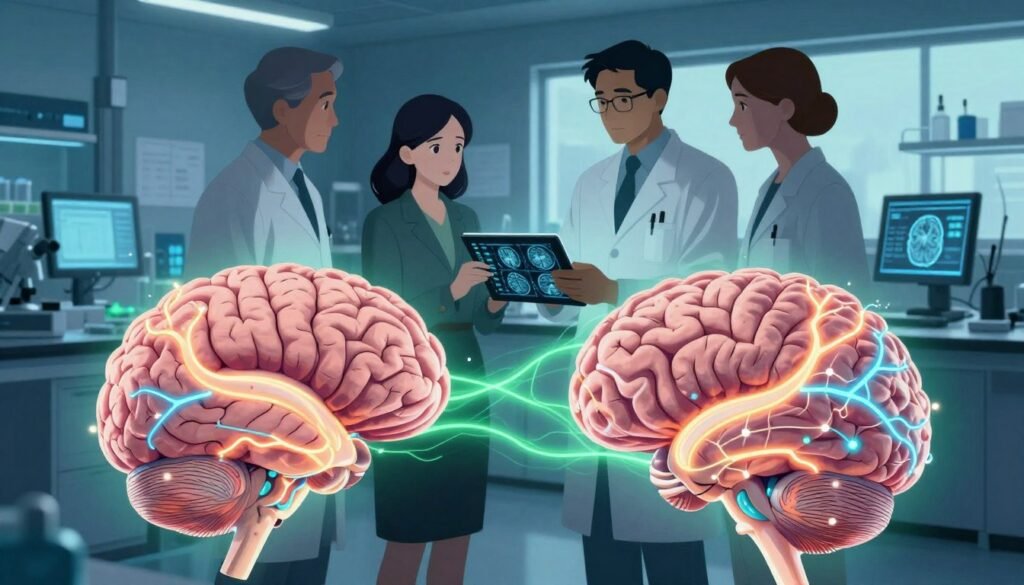
Neurogenesis, Synaptogenesis, and Synaptic Pruning
Neurogenesis is the birth of new brain cells. Experts believe this still happens in your hippocampus, a region vital for memory.
Synaptogenesis is how practice makes permanent. When neurons fire together repeatedly, they build a strong new connection.
Synaptic pruning is your mind’s spring cleaning. It trims weak, unused links to keep your cognitive pathways efficient. As Rudy Tanzi, PhD, notes, you are constantly reshaping billions of neurons and trillions of synapses.
Experience-Dependent Neural Reorganization
Your mental map is never final. Researchers see your neural pathways being wired and rewired in direct response to the demands of your life.
Early changes are just electrochemical whispers. Joel Salinas, MD, explains that only with steady repetition do these whispers become structural—the real, physical growth of your brain.
This elegant process is how you adapt. It turns daily experience into lasting cognitive capacity.
Neuroplasticity: Reshape Your Brain to Become a Genius at Any Age
Research has decoded the rules that turn simple effort into lasting neural change. In 2008, scientists Jeffrey A. Kleim and Theresa A. Jones published a landmark paper. They outlined the core principles of experience-dependent neural plasticity.
This framework explains how focused learning builds cognitive fitness.
Key Principles from Leading Research
Think of these principles as your mind’s user manual. “Use it or lose it” is the foundational law. Neural connections fade without consistent practice.
“Intensity matters.” Dedicating two hours daily to a new language forces a bigger structural change than a casual weekly session. Your brain responds to demand.
“Salience matters.” You learn best when the material feels personally meaningful. It must connect to your goals.
“Specificity” is crucial. To improve balance, you must practice balance. General activity won’t rewire those precise circuits.
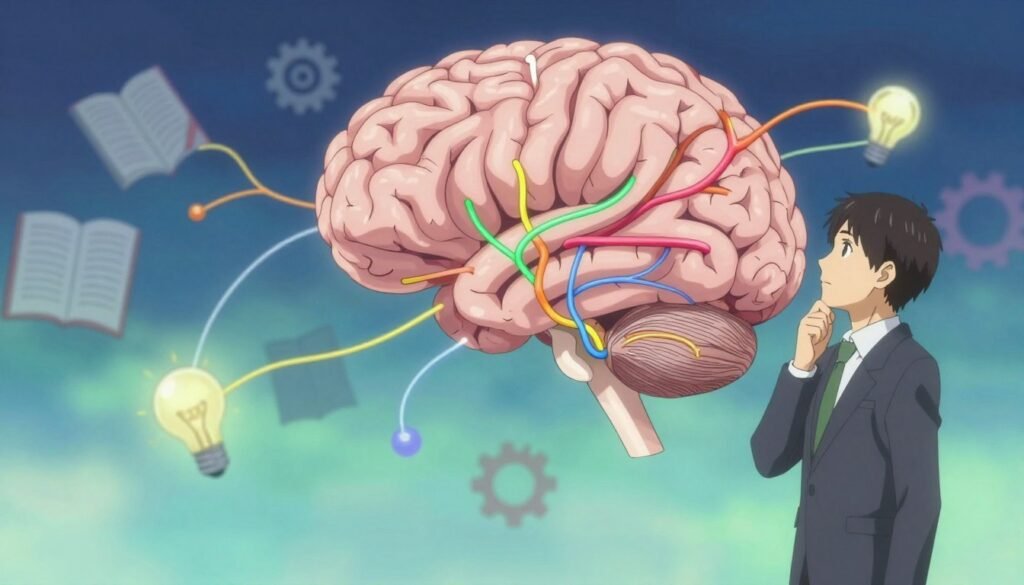
Relevance to Lifelong Cognitive Fitness
This isn’t abstract science. It’s a practical roadmap. By applying these principles, you intentionally guide your mind’s development.
You move from passive aging to active authorship of your cognitive health. The goal is high-level function for your entire life.
Your daily choices directly shape your neural landscape. This understanding transforms learning from a chore into a powerful, lifelong tool.
Brain Health Through Nutrition and Exercise
What you put on your plate and how you move your body are not just about fitness. They are direct commands to your neural architecture.
This daily foundation supports the very function and adaptability of your mind. It creates the physical environment where learning and memory can take root.

The Role of the Mediterranean and MIND Diets
Your cognitive machinery is energy-hungry. It uses a massive share of your body’s fuel. A nutritious diet provides the clean, steady energy required to maintain vital neural connections.
Research points to specific eating patterns. A study in Neurology found the MIND diet can help slow cognitive decline. It emphasizes leafy greens and berries, foods rich in protective compounds.
Aerobic Exercise and Brain-Derived Neurotrophic Factor (BDNF)
Movement is not optional for a thriving mind. Experts recommend at least 150 minutes of moderate aerobic activity each week.
This exercise does two powerful things. It boosts blood flow, reducing harmful inflammation in your neural pathways. Critically, it also triggers the release of BDNF.
BDNF is like fertilizer for your brain. Dr. Andrew E. Budson notes it’s essential for the growth of new neurons. Consistent physical habits build the optimal environment for your mind to change and strengthen, day after day.
Mental Challenges and Lifelong Learning
The mind, when left unchallenged, begins to accept its own limits as truth. But stagnation is a choice. You can choose a different path—one of continuous growth and vibrant cognitive health.

Lifelong learning is the active refusal of that decline. It is the deliberate act of keeping your mental machinery engaged and hungry.
Cognitive Exercises That Boost Neural Connections
Dr. Andrew E. Budson suggests that learning a new language, instrument, or skill forms fresh neural connections. This isn’t just theory.
When you tackle a complex strategy game or a creative pursuit, you force your brain to build new pathways. You are giving it a direct workout.
This process stimulates the growth of new brain cells. It strengthens the existing networks that handle memory and function.
Building Cognitive Reserve Through Education and Hobbies
Think of cognitive reserve as a savings account for your mind. Every new skill or hobby you master makes a deposit.
This reserve acts as a buffer. Research shows people who engage in mentally stimulating activities maintain sharper memory over time.
Visit a museum. Learn to paint. These new experiences are not just pleasant diversions. They are essential for an adaptable brain.
Cultivate these habits. Dedicate time each day to push your cognitive boundaries. Your brain‘s ability to change depends on it.
Enhancing Neuroplasticity with Sleep and Stress Management
In the quiet dark of night, your mind is not resting—it is performing its most vital work. This silent period is when the day’s learning is cemented. It’s when fragile new knowledge becomes durable.
Dr. Andrew E. Budson explains this critical process. During sleep, your brain consolidates short-term memory into long-term storage. This integration is fundamental for neuroplasticity.
Importance of Quality Sleep for Memory Consolidation
Think of sleep as your neural maintenance shift. It’s when your brain clears metabolic toxins and repairs its pathways. This isn’t just for the young.
Adults in their 70s and beyond still need seven to nine hours each night. This time is non-negotiable for optimal cognitive function. A consistent bedtime routine is one of the healthiest habits you can build.
By creating a sleep-friendly environment, you protect your mind from the inflammation linked to poor rest. You give it the space to solidify what you’ve learned.
Techniques to Reduce Stress and Protect Neural Pathways
Chronic stress is a silent saboteur. It floods your system with cortisol. Over time, this can damage neurons in areas vital for memory and emotional regulation.
The antidote is deliberate calm. Practicing mindfulness meditation is a proven way to lower stress. Research shows it supports the growth of new connections.
People who manage their stress effectively shield their cognitive health. They maintain their brain‘s ability to adapt and learn. It’s not about eliminating pressure. It’s about building resilience so your neural landscape can continue to thrive.
Harnessing New Experiences and Social Engagement for Brain Growth
Isolation is a quiet tax on the mind, paid in shrinking horizons and fading connections. Stagnation often wears the mask of solitude.
Your social world is not just a backdrop. It is a primary gym for your cognitive machinery. Dr. Andrew E. Budson points out that simply meeting new people and learning their stories is a powerful way to enhance your mind’s plasticity.
Leveraging Novel Experiences for Brain Adaptation
Every conversation is a workout. Engaging dialogue forces your brain to process language, emotion, and nuance in real time. This interactive activity directly stimulates and reinforces the connections between your neurons.
Novelty is the essential nutrient for this growth. Traveling to an unfamiliar place or attending a cultural event provides the fresh input your mind craves. These new experiences are the raw material for adaptation.
Research is clear. People with active social lives show greater resilience against cognitive decline. Quality time with friends does more than lift your mood. It provides the complex stimulation required to maintain your brain’s structural integrity and overall health.
This engagement builds a robust cognitive reserve. It is a practical tool for lifelong mental well-being. Your daily interactions are not just social. They are vital for an adaptable, thriving mind.
Adapting and Recovering: Neuroplasticity in Brain Injury and Rehabilitation
After a stroke, the brain doesn’t surrender—it launches a silent, urgent campaign of repair. This is the mind at its most resilient, proving its fundamental ability to adapt under extreme pressure.
Mechanisms of Functional Reorganization in Recovery
When damage occurs, a remarkable process begins. Healthy areas of the brain can take over the duties of injured ones. This is called functional reorganization.
One key mechanism is collateral sprouting. Undamaged neurons grow new branches to pick up the slack. They forge fresh pathways around the site of injury.
Rudy Tanzi explains that this plasticity is at its peak in the first two to three months after a stroke. This creates a critical window for recovery. Starting rehabilitation early is crucial.
Targeted activities help the mind rewire itself. They guide this innate response to restore lost function and memory. It’s a powerful testament to lifelong cognitive health.
Tools and Techniques for Daily Neuroplasticity Boost
The path to a sharper mind isn’t paved with grand gestures, but with the quiet consistency of daily habits. Your cognitive machinery responds best to steady, intentional signals. It thrives on routine.
Practical Habits and Activities to Reinforce Brain Health
Neuroscientist Rudy Tanzi provides a clear blueprint: the SHIELD plan. This simple acronym stands for six pillars that directly support your mind’s innate capacity to change.
- Sleep for memory consolidation and neural repair.
- Handle stress through mindfulness to protect delicate pathways.
- Interact socially to stimulate complex cognitive circuits.
- Exercise to boost blood flow and growth factors.
- Learn new things, like a language, to forge robust connections.
- Diet focused on whole foods to minimize inflammation.
These are not chores. They are the foundational habits that minimize wear and maximize your neural plasticity.
By weaving them into your day, you ensure your mind remains a dynamic, evolving organ. You hold the power to shape your own cognitive future, one simple choice at a time.
Conclusion
Consider this: every habit, every challenge, every moment of curiosity is a vote for the kind of mind you wish to inhabit.
You now understand that neuroplasticity is the fundamental engine. It allows your brain to adapt and grow throughout life. This plasticity is not a theory. It is your lived reality.
Your ability to change is not limited by age. It is fueled by consistent learning and new experiences. Each healthy choice you make contributes to the long-term integrity of your brain.
You possess the tools. The power of plasticity means you can consciously shape your neural pathways for a sharper, more creative life. This is your invitation to act.
Start today. Unlock the full potential of your remarkable, ever-evolving mind.