
 Mono Roso
Remember when you asked a neighbor to watch your mail for a day? That small, easy request felt natural. A week later, when you needed help moving a couch, they were far more likely to say yes.
You weren’t being tricky. You were tapping into a deep pattern of human behavior. Back in 1966, Stanford researchers Jonathan Freedman and Scott Fraser identified this powerful effect.
They found that a tiny initial agreement creates a sense of personal commitment. This makes people see themselves as helpful. That self-image then guides their future actions.
It’s the power of consistency. We all want our actions to match our beliefs about who we are. Starting with a minor “yes” makes a larger “yes” feel like the next logical step.
This isn’t about manipulation. It’s about understanding how trust is built, one manageable step at a time. It’s a strategy rooted in respect for how people naturally choose to help.
We’ll explore how this gentle approach to compliance works. You’ll learn how to apply it with integrity in your conversations and goals.
Introduction to the Gradual Influence Secret
You’ve likely experienced this: a colleague asks for a tiny favor, like proofreading a single email. You say yes easily. Later, when they need help on a bigger project, you find yourself agreeing again, almost without thinking.
This isn’t a coincidence. It’s the core of a gradual approach to influence.
Defining a Gradual Approach to Persuasion
It starts with a small request that’s almost impossible to refuse. The goal isn’t the favor itself. It’s the initial agreement. Classic research lays the groundwork.
Freedman and Fraser demonstrated in 1966 that initial compliance increases the likelihood of future agreement.
That first “yes” builds a foundation of trust and mutual value. It’s a gentle process, not a forceful one.

Why Small Requests Matter
Why does this work? We all want to feel consistent. When you agree to a minor task, you start seeing yourself as a helpful person—your self-image changes.
This creates an internal pressure. Future actions naturally align with this new view. A larger commitment feels like the next logical step.
The strategy respects the other person. It never overwhelms. Instead, it guides through a series of manageable, positive choices. This is the true power of the gradual path.
Understanding the foot-in-the-door technique persuasion psychology examples
Consider a moment when a small ask led to a bigger yes. That’s the heart of this gentle approach. It builds a psychological bridge from a minor favor to a major agreement. The process feels natural, not forced.
The Role of Commitment and Consistency
When you say yes to a tiny task, you make a subtle commitment. You start to see yourself as someone who helps. This creates an internal pressure to act consistently later.
Research supports this. A 1979 study by Zuckerman and colleagues revealed a key insight.
Unpaid subjects were far more likely to comply with a larger request.
Payment can undermine the effect. The initial action must feel personally meaningful.

Exploring Self-Perception Theory
Psychologist Daryl Bem developed the self-perception theory. It explains how our actions shape our attitudes. If you volunteer for a small request, you begin to believe you’re a helpful person.
This changed self-image guides your future choices. The strategy works by honoring that internal narrative. You’re not tricking anyone. You’re creating a way for them to act in line with their new self-view.
The key is that the first step feels voluntary. When it does, the path to a larger commitment becomes clear. It’s a powerful value for building genuine trust.
Step-by-Step Guide to Implementing the FITD Technique
What if the first step toward a big goal was almost effortless? This guide walks you through a gentle, effective strategy. It turns a simple agreement into lasting support.
Selecting a Modest Initial Request
Your first request must be tiny. Think of it as a seed. It should be so easy that saying “yes” feels natural.
In 1966, Freedman and Fraser showed this. Homemakers who agreed to a small action were twice as likely to agree to a bigger one later.
Choose an initial request with a high chance of compliance. It must feel voluntary and positive. This builds a sense of personal value.
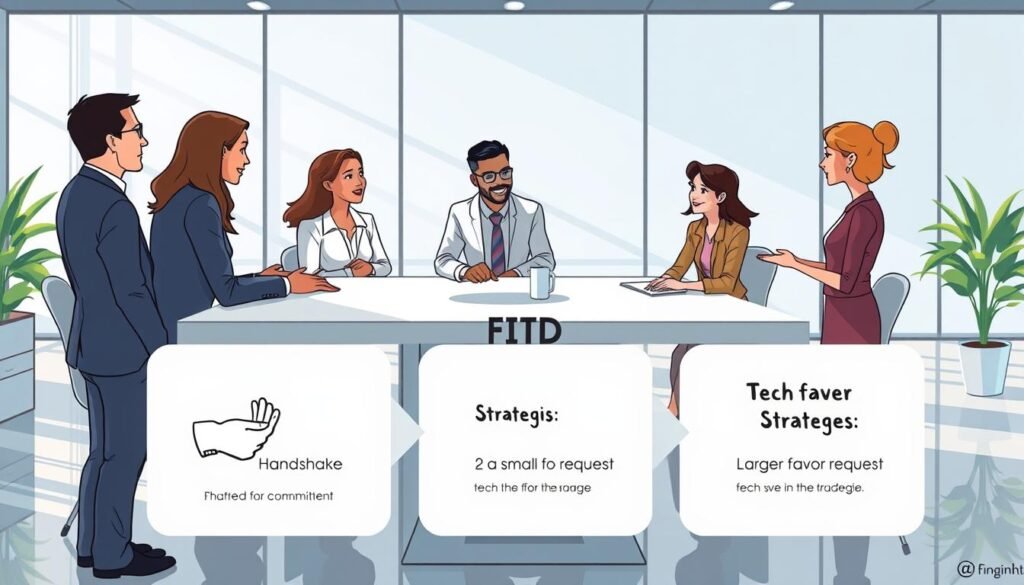
Transitioning to a Larger Commitment
After the first yes, pause, allow a little time to pass. This lets the commitment settle in.
Then, present your larger request. Frame it as a natural next step. Use self-perception theory here.
When people see themselves as helpful, they want to stay consistent. Your second ask should feel like an extension of the first.
Always be clear and transparent. Make sure they feel good about their choice. This form of engagement builds real trust.
That’s the core of the FITD technique. It’s a respectful path to deeper cooperation.
Practical Applications in Marketing, Sales, and Non-Profit Sectors
Imagine a marketing campaign that begins not with a hard sell, but with a simple, free offer. This gentle strategy transforms how people engage with brands and causes. It works powerfully across marketing, sales, and non-profit work.

Using FITD for Effective Marketing Campaigns
Marketing teams often start with a free sample or a short survey. This is a classic small request. It feels easy and carries no obligation.
That initial compliance is the key. When someone accepts the sample, they start seeing themselves as someone interested in the brand. The next step, like making a purchase, feels like a natural follow-up. This form of engagement builds a bridge of consistency.
Boosting Engagement in Fundraising Initiatives
Non-profits excel here. They might first ask you to sign a petition for their cause. This minor request is almost effortless.
Research by Carducci and colleagues in 1989 supports this. They found that students who completed a simple questionnaire were much more willing to become organ donors later.
Completing a simple questionnaire significantly increased the willingness of students to become organ donors.
This form of outreach builds a sense of community. It helps supporters see their own commitment grow. The final ask for a donation then aligns with their self-image as a helper.
Whether in a sales conversation or a charity drive, the core is respect. The FITD technique is a powerful, ethical persuasion tool. It builds genuine support by honoring each person’s journey.
Factors Influencing the Effectiveness of the Foot-in-the-Door Technique
The success of any gentle influence strategy hinges on two delicate factors. It’s not just about asking for things. It’s about asking right.
Getting a larger request approved often depends on how you handle the first step. The scale of your ask and the moment you choose are everything.
Size and Scale of the Initial Request
Your first request must be truly minor. In 1966, Freedman and Fraser established that its size needs careful balance.
It cannot feel demanding. If it does, the natural flow is broken. The goal is an easy “yes” that builds personal value and a sense of agreement.
This small request is a seed. It must be proportionate. A task that’s too large will likely be rejected.
Timing and Relationship Dynamics
Even a perfect initial request can fail if the timing is wrong. Freedman and Fraser noted that the timing between requests is critical for maintaining the effect.
If you move to your larger request too soon, you break the consistency the person is trying to uphold. A pause lets the commitment settle.
Underlying everything is trust. The effectiveness of this form of engagement depends on your relationship.
People need to feel in control of their decisions. When they do, the FITD technique becomes a powerful tool for building positive, long-term connections.
Integrating FITD with Other Persuasion Strategies
What happens when you blend a gentle ask with a reminder of freedom? The effect can be stronger than using one method alone. This integration creates a more flexible and robust way to connect.

Combining Techniques for Maximum Impact
Research shows powerful synergy. In 2010, Guéguen and his team studied waste sorting. They combined a small initial request with a simple phrase: “But you are free to refuse.”
This combination significantly increased compliance in waste sorting.
Why does this work? The reminder of freedom reinforces personal choice. It makes any agreement feel truly voluntary. This builds deeper trust and respect.
When you integrate FITD with other respectful methods, you empower people. They feel heard and valued. Their “yes” becomes a confident choice, not just a response.
- Honesty about your intentions builds transparency.
- Each step should make the person feel in control.
- This creates a personalized, effective experience.
This approach is a versatile tool. It helps you build stronger, more meaningful connections in any situation. You achieve better results through ethical, open communication.
Ethical Considerations in Applying Persuasion Tactics
Ethical influence begins not with a clever trick, but with a clear conscience. When you use a gradual approach, your integrity is your greatest asset. It’s about building bridges, not applying pressure.
Every interaction must honor the other person’s freedom to choose. This respect turns a simple request into a foundation for trust.
Maintaining Transparency and Respect
The original researchers in 1966 stressed this point. They showed that the FITD effect works best without coercion. Your role is to guide, not to push.
Always be open about your goals. When people understand the “why” behind your ask, they feel secure. Their agreement becomes a genuine choice.

Respecting autonomy is non-negotiable. Never use this technique to exploit someone. That destroys the very trust you’re trying to build.
Honesty guides every step. You act in the best interest of others. This creates a positive cycle of mutual respect.
When you apply the door technique ethically, you build long-term relationships. People feel valued, not manipulated. They see you as a partner.
This form of engagement requires care and compassion. Your success is tied to their well-being. By prioritizing both, you create lasting change.
Remember, a powerful request leaves dignity intact. The FITD method, used rightly, is a tool for good. It helps everyone thrive.
Real-Life Case Studies and Research Insights
From classrooms to inboxes, evidence shows how a minor agreement paves the way for major support. Decades of research validate this gentle method. You’ll see how fitd works in diverse, real-world settings.

These studies offer more than theory. They provide a clear blueprint for ethical influence. You are more likely to agree when the process feels natural.
Classic Experiments and Their Findings
Consider a 2011 study by Chan and Au. They compared the door technique with another method among young students.
Their work showed that a simple, positive initial request created a powerful foundation for future cooperation.
The key was a low-pressure social interaction. Children who said yes to a small task were far more likely to agree to a bigger one later. This classic finding proves the method’s reliability.
Modern Applications and Data-Driven Strategies
How does this approach translate online? Guéguen’s 2002 research provides an answer. He demonstrated that fitd works effectively via email.
A simple digital request can lead to higher compliance. This confirms the strategy’s versatility. The core principle of self-perception theory holds even in virtual spaces.
When your first small request feels helpful, people start seeing themselves as supporters. Data-driven strategies built on this insight are incredibly effective.
You can use these research insights to refine your own approach. People are more likely to agree to a larger request when they feel consistent. These forms of influence build genuine commitment.
This technique is a proven tool for positive change. Always ground your actions in this respectful, evidence-based understanding.
Conclusion
Envision how starting with a minimal gesture can lay the groundwork for substantial support. The door technique remains a powerful way to build cooperation.
It works because of the self-perception theory. Our actions shape our attitudes. A small request helps people see themselves as helpers, creating a natural drive to be consistent.
Your success with this fit approach hinges on genuine care. Build trust. Be transparent. Always respect the other person’s freedom to choose. Prioritize their needs and values.
This technique is a versatile tool. It helps you reach goals while forging stronger, more meaningful connections. See every request as a chance to create a positive, helpful experience.
By mastering this respectful fit strategy, you become a more effective and empathetic communicator. You guide with wisdom and build with compassion, creating lasting change.