 Mono Roso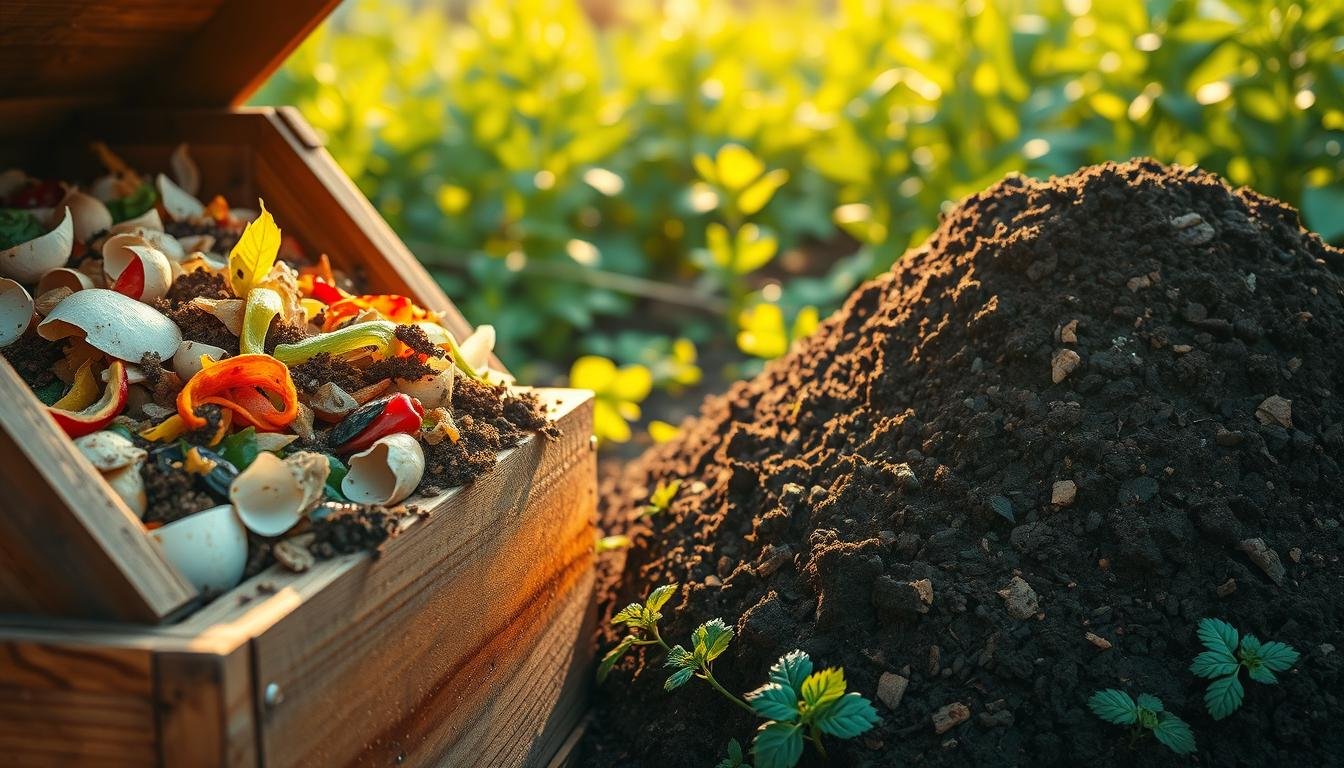
In the United States, 24% of landfills are filled with Food waste. This is not just a statistic. It’s your kitchen scraps taking up space and releasing methane, which harms our planet. But you can change this today.
Your kitchen waste is not trash. It’s waiting to become something amazing. Apple cores, coffee grounds, and wilted lettuce can fix your garden’s soil problems. Composting turns backfill soil into a growing medium that supports plant growth.
Imagine turning hard, lifeless dirt into rich, crumbly earth where plants grow well. That’s what compost does. It improves soil, feeds plants, and reduces waste. You’re making black gold without spending a lot.
Composting is simple and natural. You don’t need fancy tools or gardening experience. All you need are scraps, time, and a willingness to learn. This guide will show you why composting matters and how to do it.
You’ll learn what to put in your compost pile and what to avoid. You’ll find a method that fits your space, whether it’s big or small. You’ll also get help when things go wrong, because they sometimes will. That’s okay.
By the end, you’ll know how to turn kitchen waste into garden success. No confusion. No overwhelm. Just practical steps that work.
Key Takeaways
- Food waste occupies a significant portion of US landfill space and releases harmful methane into the atmosphere.
- Composting transforms backfill soil into a nutrient-rich growing medium without the use of expensive chemicals.
- Organic matter acts as the magic elixir that fixes clay soil, improves drainage, and builds soil structure.e
- Homemade compost saves money while reducing your household waste and environmental impact.
- Composting requires no special skills or equipment—just kitchen scraps, patience, and basic knowledge.
- Your compost pile provides nitrogen, phosphorus, and potassium that plants need to flourish.
Why Composting is Your Garden’s Secret Weapon
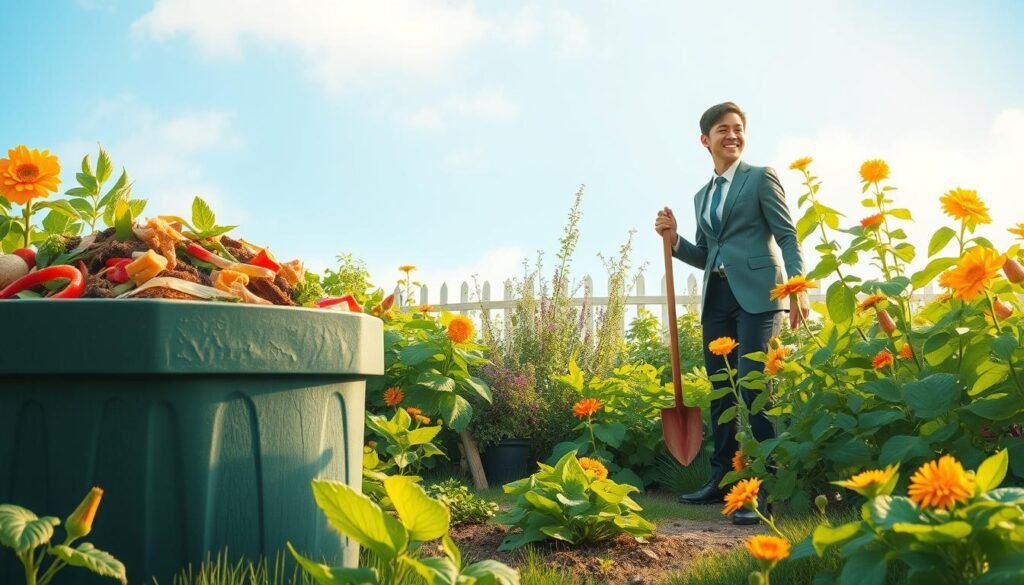
You stand in your garden, looking at tired soil. Your plants struggle, and your grocery bills rise. What if there’s a better way? Composting changes everything. It turns waste into something valuable, enriching your soil and saving money.
This isn’t just gardening advice. It’s about taking control of your growing space. You create nutrients rather than buying them. This is sustainable living that saves money.
The Environmental Impact of Kitchen Waste
Look at what goes into your trash. Food scraps, vegetable peels, coffee grounds. These items fill 4% of US landfill space, doing nothing but causing harm.
When Food waste decomposes in landfills, it creates methane. Composting stops this by turning kitchen scraps into garden nutrients. This reduces greenhouse gas production and methane emissions.
Composting also prevents pollution by avoiding synthetic chemicals. You’re breaking the cycle of industrial agriculture that harms our land.
How Compost Transforms Soil Health
Compost is like magic for your garden beds. It provides essential nutrients:
- Nitrogen for green growth
- Phosphorus for root development
- Potassium for plant strength
Compost does more than provide nutrients. It improves soil structure, making it workable. It boosts microbial activity and increases water retention. It naturally fights plant diseases and pests.
Every soil benefits from compost. Poor soil transforms, and good soil becomes excellent.
Cost Savings and Sustainability Benefits
Composting means no more expensive fertilizers. You create them from waste. This saves money and reduces waste.
By composting, you reduce reliance on synthetic fertilizers. This saves money and protects ecosystems. Your garden thrives without chemicals.
Composting is a secret serious gardeners know. It makes your soil richer, plants stronger, and waste smaller. It’s good for the earth and for you.
Understanding the Basics: What Can and Cannot Be Composted
Starting with composting means knowing what goes in and what doesn’t. This knowledge is key. It helps avoid mistakes that slow down the process. It also keeps pests and odors away.
Think of composting like a recipe. The right ingredients make it work. Just like baking, compost needs the right mix.
Knowing what feeds your compost and what harms it is essential. This knowledge is the foundation of your success.
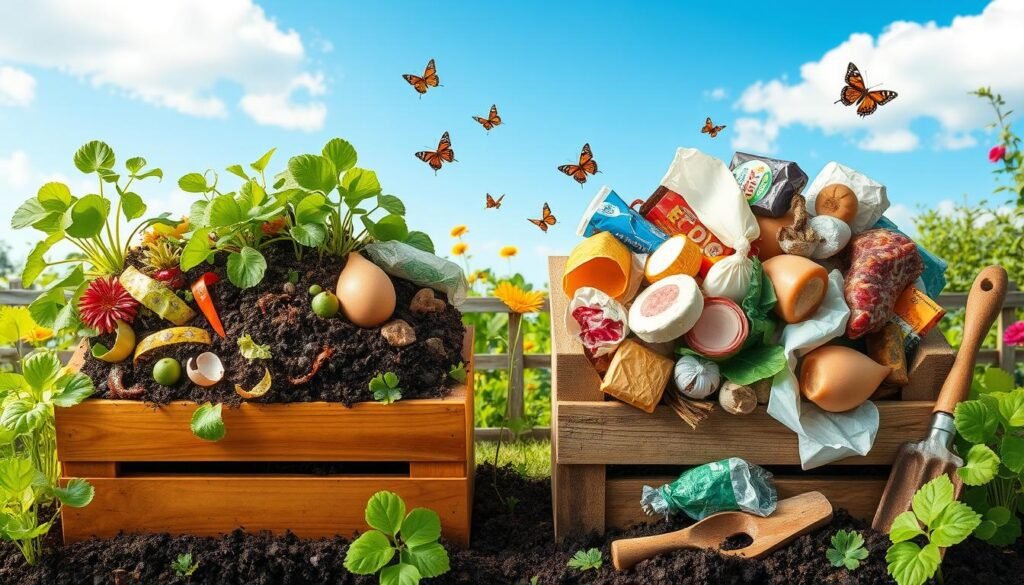
Materials You Can Compost
Your kitchen is full of treasures for your compost bin. Fruit and vegetable scraps break down well. Think of banana peels, carrot tops, and apple cores.
Coffee grounds and tea bags are great, but remove staples first. Crushed eggshells add minerals. Fallen leaves from your yard become valuable.
Yard waste is good for your compost, too. Grass clippings add nitrogen. Weeds without seeds are safe for your garden. Old potting soil and shredded paper balance carbon.
- Fruit and vegetable scraps
- Coffee grounds and tea bags
- Crushed eggshells
- Fallen leaves
- Grass clippings
- Weeds without seeds
- Old potting soil
- Shredded paper
- Cut flowers and houseplants
- Bread, rice, pasta, and grains
- Vegetable broth
Materials You Cannot Compost
Some items harm your compost pile. Meat scraps attract rats and smell bad. Fish bones and dairy products spoil and smell terrible.
Cooking oil and grease block air flow. Diseased plants spread illness. Weeds with seeds survive and return. Pet waste is dangerous for Food gardens. Plastics, metals, glass, and rubber never break down.
- Meat scraps and bones
- Fish and seafood
- Dairy products
- Cooking oil and grease
- Diseased plants
- Weeds with seeds
- Pet waste
- Non-biodegradable materials
- Deep-fried foods
Balance is key in composting. You need nitrogen-rich “green” materials and carbon-rich “brown” materials. A 2-to-3-to-1 ratio is best. This balance speeds up decomposition.
Composting Guide, Organic Gardening, Waste Reduction, Sustainable Living
Are you ready to start composting? The big question is: which method is right for you? Your space, schedule, and waste amount are key. Luckily, many paths lead to the same goal: rich compost for your garden.
Choosing the Right Composting Method for Your Space
Consider your location. Do you have a backyard, an apartment, or a small patio? Your answer will guide your choice.
Backyard piles are great for sunny spots with good drainage. They’re simple and free. Compost bins speed up decomposition and keep things tidy. You can make your own or buy one.
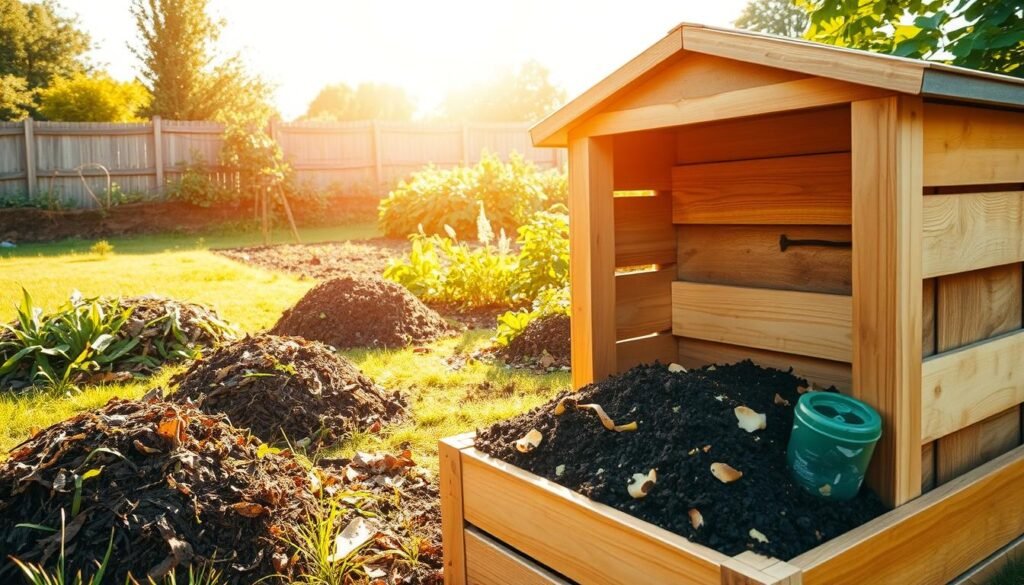
For small spaces, vermicomposting with red worms is ideal. These worms work indoors or outdoors in a bin. They’re quiet and produce rich compost. Bokashi composting uses a sealed container and microorganisms. It’s good for indoor use and handles foods that other methods can’t.
Trench composting is simple. Dig 8-12 inches deep, bury scraps, and cover with soil. It’s a straightforward way to compost right in your garden.
Essential Tools and Materials to Get Started
You’ll need a few basics to start:
- A bin or designated space (store-bought or DIY)
- Brown materials—dried leaves, straw, shredded paper, cardboard
- Green materials—Food scraps, fresh grass clippings, coffee grounds
- A pitchfork or shovel for turning (optional but helpful)
- Water source for moisture management
For vermicomposting, you’ll need a container, bedding, and red worms. Bokashi requires a sealed bucket and special bran.
Creating the Perfect Carbon to Nitrogen Balance
This might seem tricky. But it’s actually simple.
Brown materials are carbon-rich. Green materials are nitrogen-rich. Aim for 2-3 parts brown to 1 part green. Think of it as a recipe, not a strict rule.
- Too much green? It becomes soggy and smells
- Too much brown? Decomposition slows down
- Just right? Everything breaks down beautifully.
Don’t worry too much about getting it perfect. Layer your materials, keep them moist, and let nature do the rest. Your compost pile will tell you what it needs. Just listen.
Step-by-Step: Building and Maintaining Your Compost System
Building a compost system is easier than you think. The key is picking the right spot and sticking with it. Let’s go through each step together.
First, pick a spot for your compost. A sunny area is best because it helps things break down faster. But shade works too. One gardener even composts in the woods, and it works great.
Next, decide on a two-bin system. This lets you keep composting while your finished compost rests. You can make your own bins or buy a tumbler. The two-bin system is smart because you can switch sides when one is full.
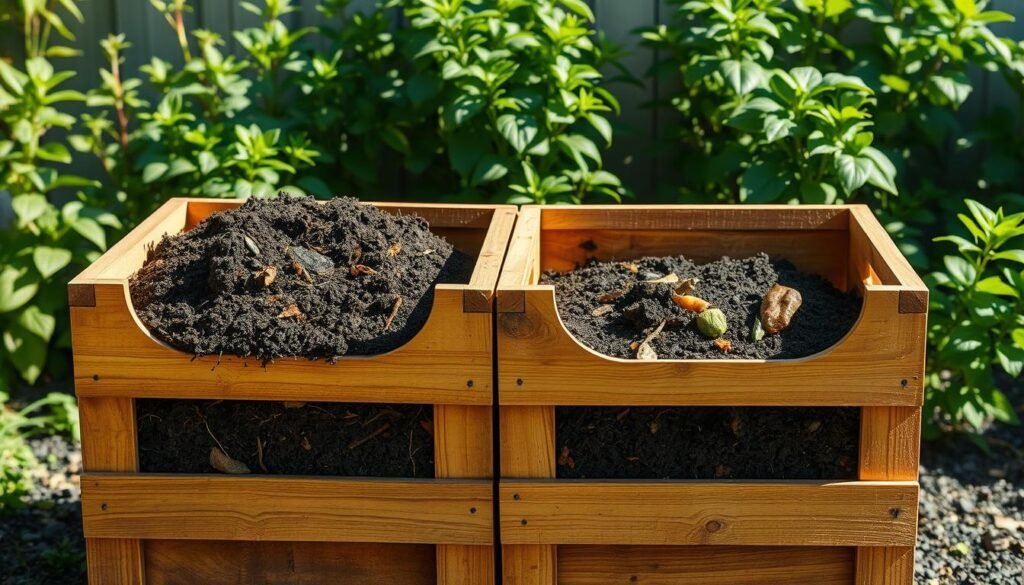
After setting up, start adding materials to one bin. Mix kitchen scraps with yard waste, alternating between green and brown materials. Think of it like lasagna—wet grass, then dry leaves. Don’t worry about exact ratios. Just keep alternating.
To keep things moving, turn the pile every few weeks. This introduces oxygen and speeds up breakdown. The author sometimes goes months without turning. Do what you can.
Check that your pile feels like a wrung-out sponge. If it’s too dry, add water. If it’s too wet, mix in dry materials and turn it over.
As materials transform, you’ll see color darken and texture crumble. Move partially decomposed material between bins. Adding finished compost to new material can speed up the process.
How long it takes depends on when you start. Spring filling means compost by fall. Summer filling means compost by spring. That’s about six months. One gardener even composted whole corn stalks in July and had compost by spring.
- Choose a location with sun or partial shade
- Build or buy a two-bin system for continuous composting
- Start filling one bin with alternating green and brown materials
- Turn every few weeks with a pitchfork for faster breakdown
- Monitor moisture levels—aim for a damp sponge consistency
- Switch to the second bin when the first fills
- Move partially decomposed material between bins
- Add finished compost to new material to jumpstart decomposition
This isn’t perfect composting. It’s real-world composting that works with your schedule and space. And it makes amazing soil.
Troubleshooting Common Composting Challenges
Your compost pile will face problems. That’s normal. Every gardener encounters issues—strange smells, unwanted visitors, moisture problems, or stalled decomposition. The good news? Most challenges have straightforward solutions. Understanding what’s going wrong helps you fix it quickly and build confidence in composting.
Dealing with Odors and Pests
Bad smells mean something’s off balance. Rotten odors come from too many wet materials or from materials you shouldn’t compost. To prevent odors, ensure a good mix of green and brown in your pile. Avoid meat, dairy, and grease—these create the worst smells and attract pests. Turn regularly to boost oxygen and reduce odor buildup. If you follow Bokashi guidelines for fermenting Food waste, you eliminate odor problems.
Pests appear when Food scraps sit exposed. Don’t compost animal products or fats—they’re pest magnets. Instead, bury scraps in a trench or use a covered bin to keep pests out. Turn regularly to disrupt nesting and break up their habitat. Fruit flies love fresh fruit scraps. Cover them with brown material to solve this instantly.
Adjusting Moisture Levels and Temperature
Moisture problems are easy to spot and fix. Too wet? Your pile feels soggy and heavy. Add dry brown material, such as leaves, straw, or shredded paper. Mix it in well. Too dry? The pile looks dusty,y and decomposition is slow. Sprinkle water while turning, or add moisture-rich scraps like grass clippings and vegetable scraps. Aim for that damp-sponge feeling.
Temperature affects speed. When you balance green and brown materials with a carbon-to-nitrogen ratio of 25-30 parts carbon to 1 part nitrogen, chop large pieces into smaller pieces, and turn regularly for oxygen, your pile heats up. Hot piles break down in weeks. Cold piles take longer, but they work well too. If decomposition seems slow, these adjustments restart the process.
Handling too much waste happens. Share with community composting groups, get a larger bin, or consider a biogas system for serious volume.
Recognizing When Your Compost is Ready to Use
Finished compost tells you it’s ready. It smells like fresh forest floor—earthy and rich. The color is dark brown, almost black. Pick it up. It feels cool, not warm. Squeeze it. It crumbles in your hand.
- Dark brown or black color
- Cool temperature when touched
- Crumbly texture that falls apart
- Earthy, rich smell
- No identifiable Food scraps visible
If you see vegetable peels or the pile feels warm, give it more time. If woody twigs remain, screen them out and return them to the active pile. This keeps your organic gardening success on track and your system running smoothly.
Conclusion
Composting is easy, not pricey, and not just for experts. It’s like nature’s recycling. By composting, you turn banana peels, coffee grounds, and leaves into something valuable. This action is a real change.
It turns kitchen waste into something amazing for your garden. Organic matter is key to improving soil. Your plants will love it for years.
Improving soil takes time, sometimes years. One gardener took two years to turn poor soil into good soil for plants. Another turned corn stalks into rich soil by spring. Your situation is unique, but the idea is the same.
Composting turns poor soil into fertile soil for your veggies. The author’s garden soil improved significantly with composting. You can too, if you’re patient and keep at it.
Begin where you are, whether it’s on your balcony or in your backyard. You can even build a compost system with your family. Worms in a box under your sink work too. The method doesn’t matter as much as starting.
You’ll make mistakes and face challenges like smells and pests. But that’s okay. Adjust and keep going. The reward is soil that feeds your plants and reduces waste. Your garden and the planet will thank you.