 Mono Roso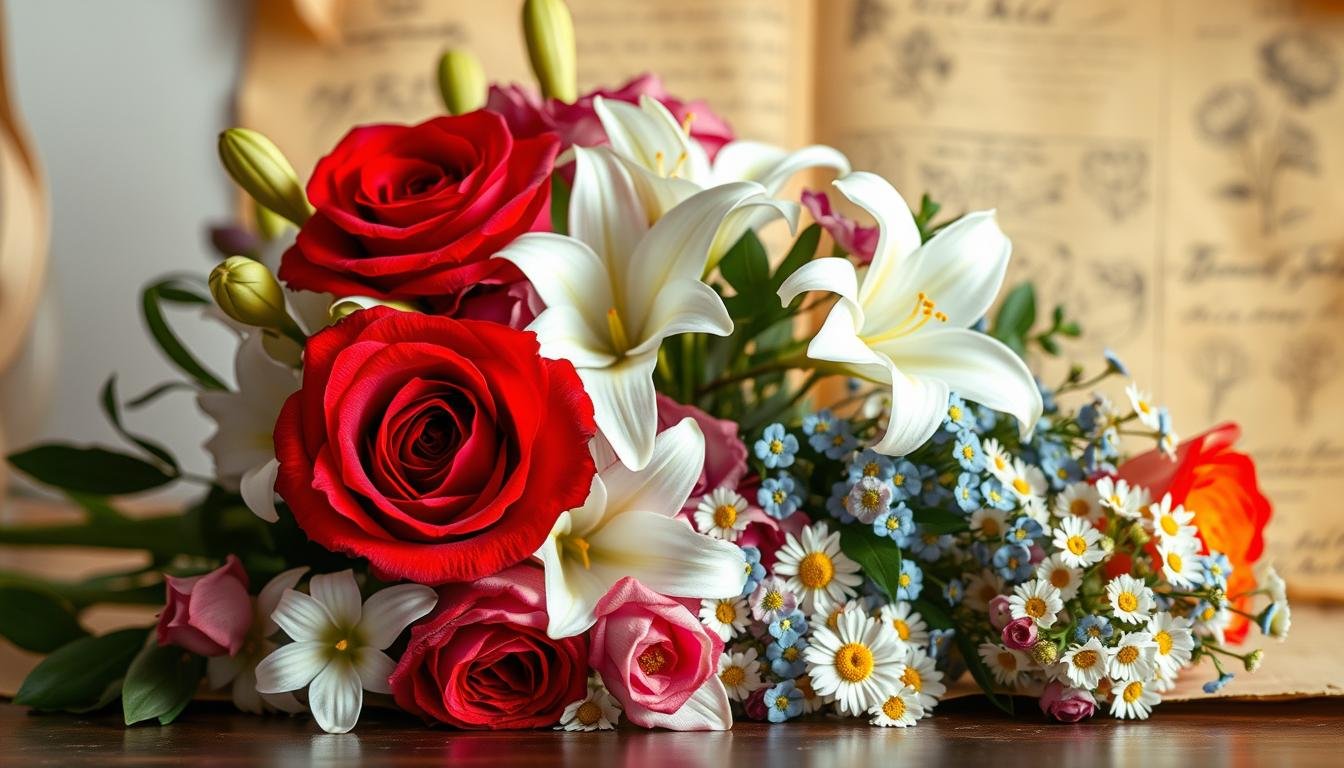
You find a small bouquet on the kitchen table. It has red poppies, orange blossom, and a chrysanthemum. At first, you think about the colors and scents. Then, you wonder if someone wanted to say something without words.
For centuries, the language of flowers has been a quiet way to communicate. Ancient Greeks and Romans used flowers as metaphors. Chinese and Egyptian traditions included plant symbolism in rituals and myths. Shakespeare also used flowers in his works.
This long history is the basis of modern floriography. Flowers now carry deliberate messages. You might feel overwhelmed by all the meanings of flowers and the conflicting sources. This is normal.
Color, condition, and arrangement all change a bloom’s message. An orange blossom once signified chastity but is now associated with weddings. A red chrysanthemum can mean “I love you” in some places but not others. The red poppy, once a symbol of remembrance in the UK, shows how meanings change over time.
Our goal is simple and practical. We aim to help you understand the symbolic meanings of flowers. Whether for a wedding, a memorial, a tattoo, or a small act of kindness, you’ll choose blooms with purpose.
Key Takeaways
- Flowers have long served as a form of communication across many cultures.
- Floriography blends history, literature, and folklore to give flowers a symbolic meaning.
- Color, condition, and presentation change what a flower expresses.
- Some examples: orange blossom for chastity, red chrysanthemum for love, red poppy for remembrance.
- This guide will help you choose flowers with intention for gifts, weddings, memorials, and personal reflection.
Origins and History of Floriography: How Plants Became a Silent Language
Imagine standing at the start of a long story where nature speaks through petals. This brief history shows how plants evolved from myths and rituals into a secret language. It’s all about tracing the journey so you can see patterns without needing to memorize every detail.
Ancient roots in myth, religion, and folklore
In ancient Greece, Rome, Egypt, and China, flowers carried deep meanings. The lotus symbolized purity and rebirth in both Asian and Egyptian traditions. Myrtle was linked to love and marriage in Rome and was also important in Jewish rituals.
Early uses of plants in myths and stories laid the groundwork for later meanings. People began to see plants as a way to communicate subtly, even before written guides existed.
Medieval and Renaissance continuities
In medieval Europe, the language of flowers continued to grow. Herbals listed plants for healing and moral lessons. Churches and frescoes used plants to teach faith and virtues to those who couldn’t read.
Renaissance artists and courtiers added layers of allegory to these meanings. Wearing certain colors or choosing flowers for bouquets became secret messages. This period helped spread a common language of flowers across different regions.
Victorian-era explosion of the language of flowers
The 1800s saw a huge growth in floriography. Victorians used flowers to send messages due to strict etiquette and limited honest speech. Handing flowers with the right hand meant “yes,” while handing them with the left meant “no.”
Some Victorian meanings are well-known. Bluebells meant kindness, peonies hinted at shyness, and rosemary was for remembrance. Tulips symbolized passion. But remember, meanings varied by time and place.
Understanding broad themes is key. Trust the context when you see a bouquet in real life. You don’t need to know every flower’s meaning.
Flower meanings, floriography, symbolism, nature’s language.
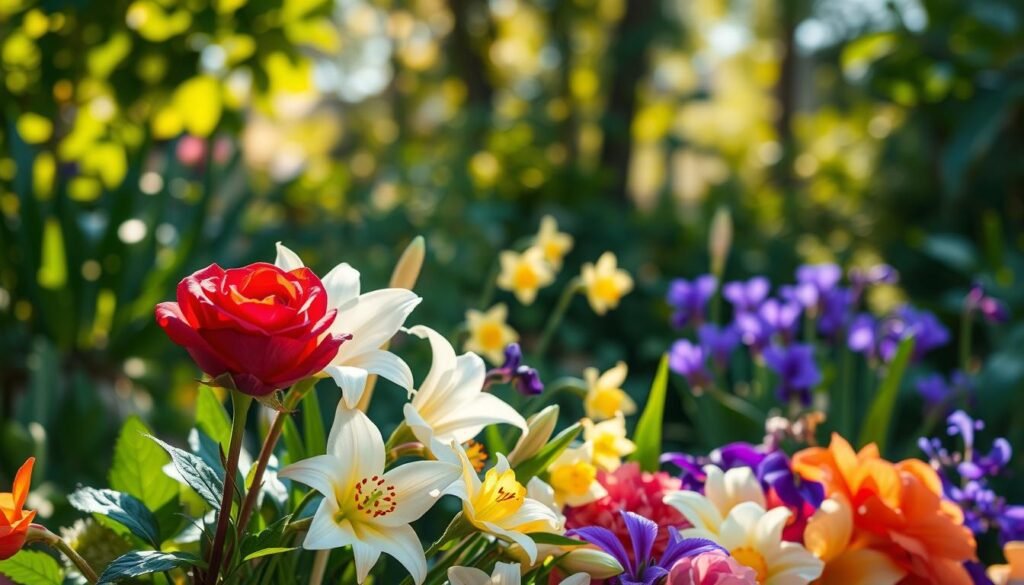
Let’s start with the basics of floral messages. Flower meanings are special connections, such as love, mourning, or remembrance. Floriography is the formal practice of assigning these meanings, popular in Victorian England. Symbolism is broader, used in culture and literature, and changes over time. Together, they make up nature’s language.
Meanings vary by region and time. In Japan, cherry blossoms symbolize fleeting beauty and sadness. In China, they often represent feminine beauty. Roses have different meanings,s too, like purity or jealousy, depending on the color.
To understand a bouquet, start with the flower and its color. Color can change a flower’s meaning. Roses, carnations, and violets are good examples where color is key. Then, look at how the flowers are arranged and who gave them.
Interpreting flowers is more than just looking at them. Mixed blooms have deeper meanings. The number of flowers and who gave them are important. Think about the occasion and the emotions in the room.
For accurate meanings, check different sources. Victorian guides are good for historical meanings. Modern charts from trusted sources like The OlFarmer’s’s Almanac and florists help with today’s meanings. If unsure, stick to clear modern meanings to avoid misunderstandings.
Here’s a simple rule: look at the flower type first, then the color, and lastly the context. Use a mix of reading and ask simple questions. This way, you can understand flower meanings with confidence and care.
Popular Flowers and Their Symbolic Meanings
Flowers can tell us a lot about our feelings. They connect nature with our emotions. By choosing the right flower and color, we can express ourselves without words.
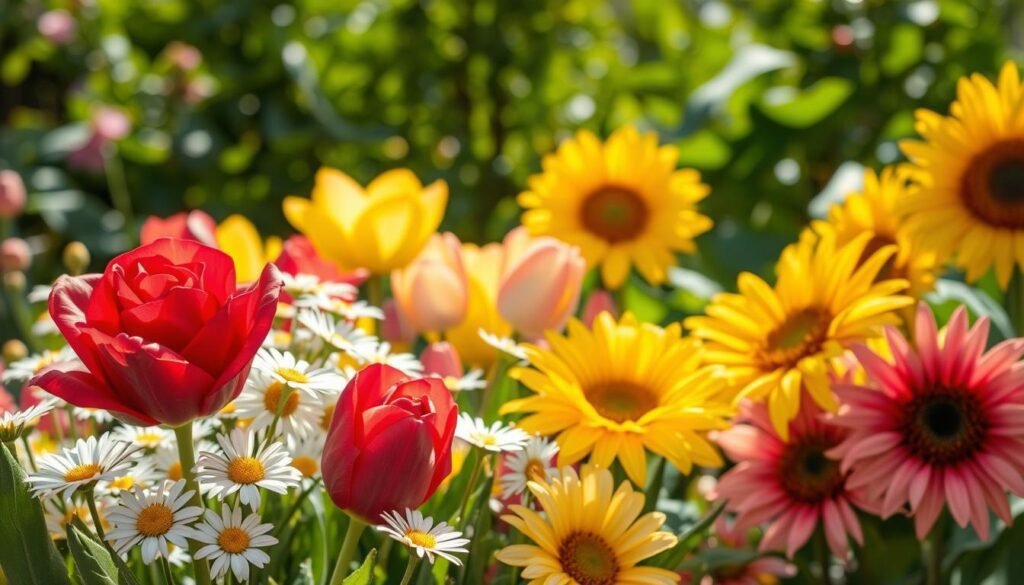
Roses are often the go-to for expressing love. A red rose says, “I love you.” White roses symbolize purity and innocence. Deep reds are for mourning.
Pink roses show grace and gentleness. Yellow roses warn of jealousy or broken trust. Orange roses express desire and enthusiasm. Lavender roses are for love at first sight. Coral roses suggest friendship or sympathy.
Roses and color-specific meanings
Think about the feeling you want to share. The right color and setting can make a big difference. A single red rose is intimate. A mix of roses can convey more.
Carnations, tulips, lilies, and common garden blooms
Carnations often mean fascination and distinction. They are closely tied to women’s love. Pink carnations say, I’lll never forget you.” Red ones mean “my heart aches for you.”
Purple carnations hint at caprice. White ones are for innocence and sweetness. Yellow can mean rejection. Striped ones signal refusal. Solid colors usually mean yes.
Tulips are about perfect love. Red tulips declare love. Yellow tulips bring joy and cheer. Variegated tulips praise the beauty of the eyes. Holland made tulips a cultural symbol.
Lilies are about majesty and purity when white. Calla lilies suggest magnificent beauty. Orange lilies speak to desire and passion. Lily-of-the-valley brings sweetness and a promise of happiness.
Hyacinths and daffodils add to the spring meanings. Chrysanthemums speak to fidelity and joy. A red chrysanthemum means love. Yellow may hint at slighted love. White ones stand for truth.
Less common and culturally specific plants
Cultural context changes meanings. A red poppy is a solemn emblem of remembrance in the UK. Myrtle is for royal and wedding bouquets, symbolizing love in marriage. Cherry blossom marks transience in Japan and feminine beauty in China.
Herbs and lesser-known flowers add nuance. Rosemary keeps memory alive. Amaranth stands for immortality. Forget-me-not is a pledge of true love and remembrance. Marigold can mean grief or cruelty in some traditions. Know the culture before you choose a bloom.
When you pick a gift, match the flower, the color, and the cultural context to the message you intend to send. This small care turns a bouquet into a clear, heartfelt note from nature about feelings and meaning.
Color, Arrangement, and Context: How Presentation Changes Meaning
When you see a flower, you feel something. This feeling comes from its color, shape, and arrangement. In floriography, how flowers are presented can make a simple gesture into a deep message. Pay attention to these details. They are important.
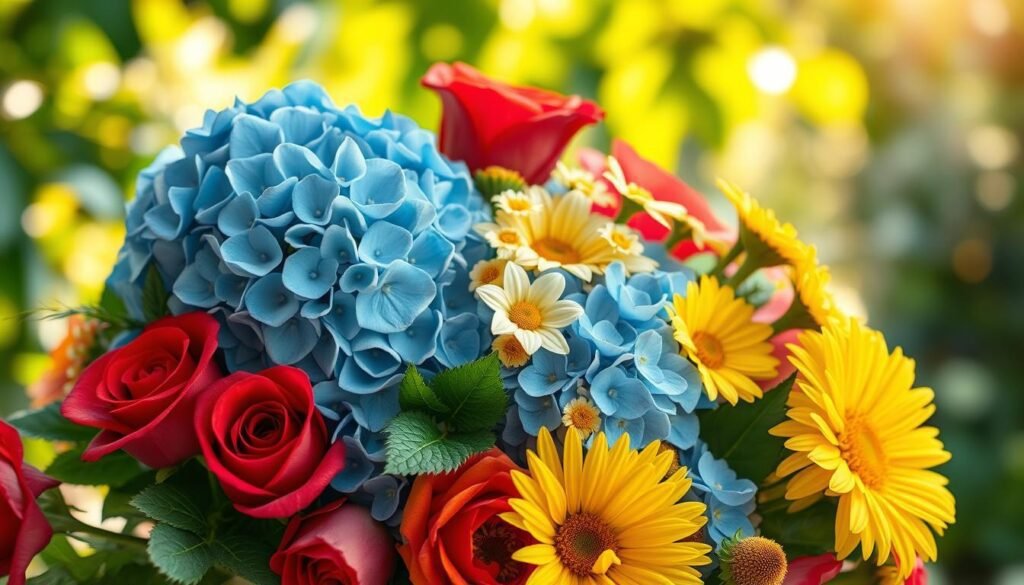
Color-coded symbolism across species
Flower meanings often change with color more than with species. A red rose means passionate love. A white rose is about purity. Carnations show gratitude in pink, innocence in white, and admiration in red.
Violets are nuanced: white for innocence, purple for being in love. Hyacinths change mood by color: blue for constancy, purple for sorrow, or asking for forgiveness.
Arrangement, bouquet condition, and accessory cues
The state of flowers changes the message. Fresh, open flowers show sincerity. Wilted or drooping flowers suggest regret or cooled feelings. An upside-down stem can change the meaning.
Dried white roses have older, harsher meanings, like sorrow. Accessories like ribbons add to the message—a ribbon tied to the left points to the giver, while one tied to the right points to the receiver. How flowers are given—palm up or down—can show acceptance or refusal.
Number, pairing, and mixed bouquets
Counting flowers matters. A single bloom means singular devotion. A dozen red roses clearly show love in many cultures. Bouquets of mature, open flowers express gratitude and warmth.
Pairing different flowers adds layers to the message. A wedding bouquet with lily-of-the-valley for trust, myrtle for love, and ivy for continuity wishes for a lasting marriage. Mixed-color bouquets create complex meanings. Red and white together mean unity. Red and yellow together bring joy and excitement.
To send a clear message, consider color, species, condition, count, and accessories. Small choices in arrangement and presentation can turn flowers into a clear, deliberate message in nature’s language.
Flower Language in Culture: Weddings, Mourning, Holidays, and Modern Uses
Flowers send messages in many ways. You see them at weddings, during mourning, on holidays, and in new uses. They express their feelings quietly. You don’t need to know everything to use them. What you mean is more important than how well you do it.
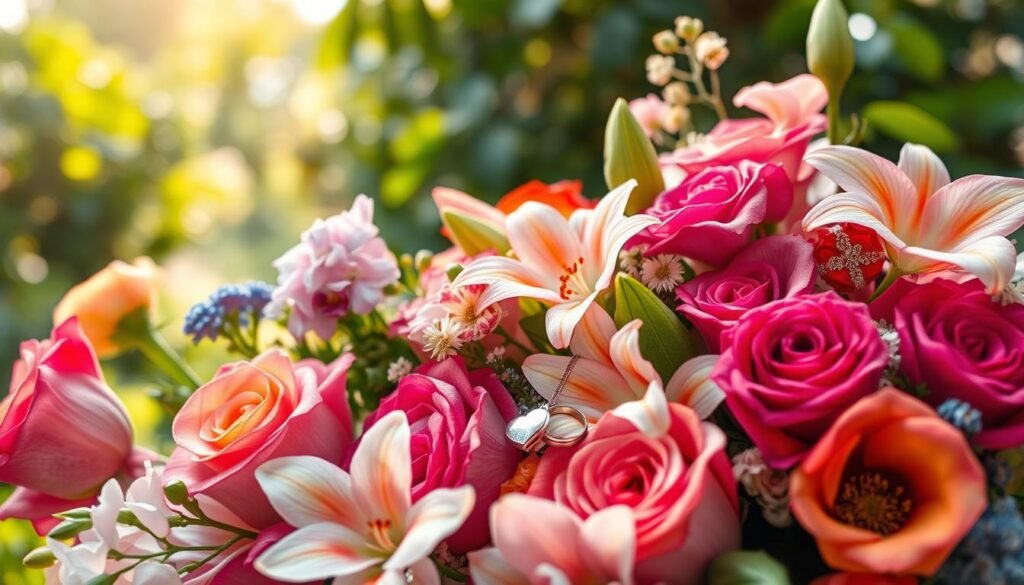
Weddings and ceremonial symbolism
Bridal bouquets and boutonnieres follow old traditions. The Duchess of Cambridge’s bouquet shows this. It had lily-of-the-valley for purity, myrtle for love, and ivy for lasting love.
Bridesmaids’ flowers let you make gifts special. The groom wearing a piece of the bride’s bouquet is a nod to old times. It shows the vows are shared through flowers.
Remembrance, memorials, and national symbols
The red poppy is a symbol of remembrance worldwide. It’s big in the UK, Belgium, and France. Chrysanthemums are for funerals, with white ones meaning truth and loyalty.
Cypress and evergreens are for mourning and lasting strength. These flowers shape how we remember and grieve.
Contemporary adaptations: tattoos, gifts, branding, and social signals
Today, flowers are used in design, tattoos, and branding. Orchids and lotuses mean refinement and purity. Bold flowers like proteas show strength in logos.
Tattoos often use flowers to represent personal growth or memories. Giving specific flowers is a way to send a message. Forget-me-nots mean remember, and orange blossoms are for weddings.
A single rose can mean “sorry” or “love,” depending on the situation. Guides help pick flowers with meaning. This way, giving flowers becomes a means of communication.
Some flower meanings have changed, but many are timeless. New meanings come as people use old symbols in new ways. These traditions help us express joy, loss, and more without words.
Conclusion
Flowers have been sending messages for ages. They’ve been used in ancient myths and Victorian times. The study of floriography shows how flowers carry meanings based on their type, color, and origin.
When you want to send a message, think about what you want to say. Match the flower’s type, color, and condition to your message. Use guides like Victorian manuals or books by Theresa Dietz and Jessica Roux to learn more.
You don’t have to know everything at once. Start with a few flowers and their meanings. Practice making bouquets with a purpose. Notice how they change the mood and how we communicate.
Try picking a bouquet for a special occasion. Use the charts mentioned to help you choose. We’ll learn together, one flower at a time.