
 Mono Roso
Do you remember that sinking feeling? You need an important document for a meeting that starts in five minutes. Your screen is a jungle of icons, folders named “New Stuff,” and downloads from six months ago. You’re frantically clicking, your heart rate climbing. That chaos isn’t just annoying. It’s stealing your time and peace of mind.
You deserve better. A workspace that supports your goals instead of draining your energy. This is exactly why Shawn Lemon founded The Digital Organizer. He saw how this modern struggle holds people back. His mission is to transform that overwhelming mess into something calm and intuitive.
We’ve all been there. The cycle of searching for lost items, feeling frustrated, and promising to “get organized tomorrow.” It’s exhausting. But what if you could stop that cycle for good?
This guide is your first step. We’ll walk through the practical moves you need to turn that messy desktop into a streamlined, efficient command center. By following a clear, structured approach, you can finally reclaim your focus. You can build a workflow that lasts.
Let’s begin. Together, we’ll move from chaos to clarity.
Introduction to Digital Clutter and Productivity
Your computer’s home screen should be a launchpad, not a labyrinth. Yet for many of us, it feels like the latter. Judith Guertin understands this deeply. With over 25 years of guiding people to order, she sees how our paper-based habits have poorly translated to our screens.
The result? A hidden tax on your day.
Understanding the cost of disorganized digital files
When your workspace is cluttered, you lose. Hours vanish each week just hunting for items. This isn’t just about wasted minutes. It’s a constant, low-grade stress that fragments your attention and drains your energy.
You feel the mental weight of a hundred forgotten downloads and unused apps. It’s exhausting.
Overview of benefits with a systematic approach
There is a better way. Adopting a clear method transforms that chaos. You gain back your time and focus. Your important documents become instantly accessible.
This isn’t about perfection. It’s about creating a sustainable framework that supports you. You’ll spend less energy on managing stuff and more on the meaningful work you love. That’s true clarity.
Understanding Desktop Clutter and Its Impact
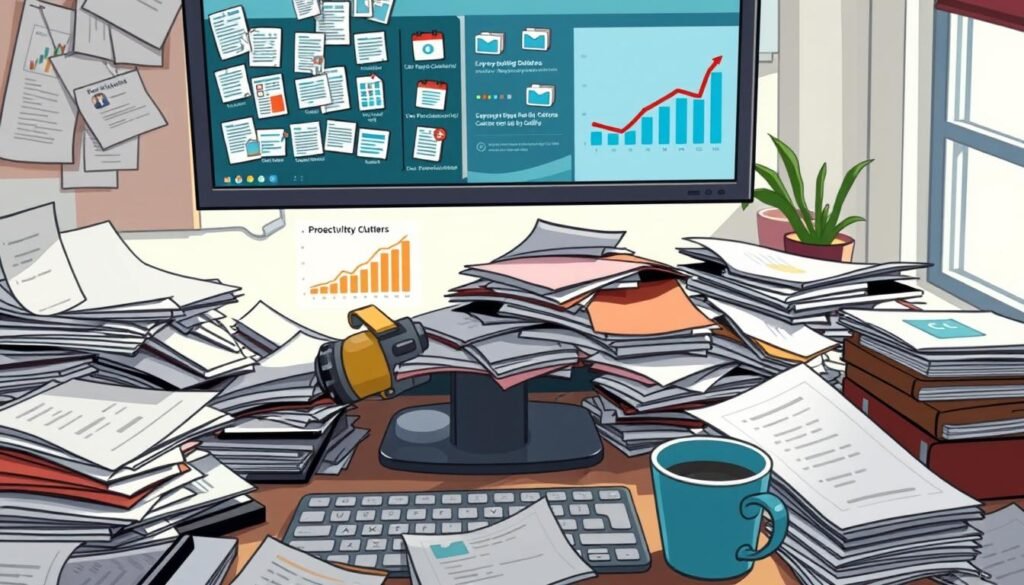
We often feel the strain of disorganization, but seeing it in black and white makes it undeniable. Research paints a clear picture of what that visual chaos truly costs us every day.
Real workplace challenges and statistics
Consider your own experience. How long does it take to locate a single item? According to a 2021 report, the average worker spends 18 minutes on that very task. That’s nearly a full workweek each year, just hunting.
This isn’t a small inefficiency. File issues account for over 21% of daily productivity loss. What’s more, 86% of people say locating office materials is a major challenge. You’re not alone in this struggle.
The frustration peaks when you can’t find what you need at all. A staggering 83% of workers have had to recreate documents from scratch. They lost the originals in the mess.
These numbers highlight why managing your digital files matters. It’s about protecting your most precious asset: your time. When you can find what you need quickly, you regain control and focus.
Recognizing the Hidden Costs of Disorganization
Lost time is more than just minutes on a clock; it’s pieces of your life you can’t get back. Brian Nelson-Palmer, who trains Productivity Gladiators, reminds us of this truth. Time is the currency of your life. You must spend it wisely.
When your organization slips, you pay a hidden tax. It’s not just about misplaced items. It’s increased stress and missed chances. You feel that tension in your shoulders during a frantic search.
Scattered files create a real barrier. They make sharing complex data with your team or family needlessly hard. Important materials get lost in the shuffle. This friction slows everyone down.
You might feel constantly behind. Your key documents are scattered across different locations without a clear structure. This chaos breeds a sense of always playing catch-up. It’s exhausting.
Taking charge of your workspace is a powerful act of self-care. It stops the burnout from endless, unproductive searching. You reclaim your focus and your peace. That’s a win for your well-being.
Implementing a digital file organization system zone 51 productivity
The secret to a smooth workflow isn’t more apps. It’s a single, reliable home for all your materials. Shawn Lemon, founder of The Digital Organizer, sees this daily. He notes the chaos that springs from using too many different storage solutions. Your focus gets scattered across platforms.
Key Features and Benefits of the System
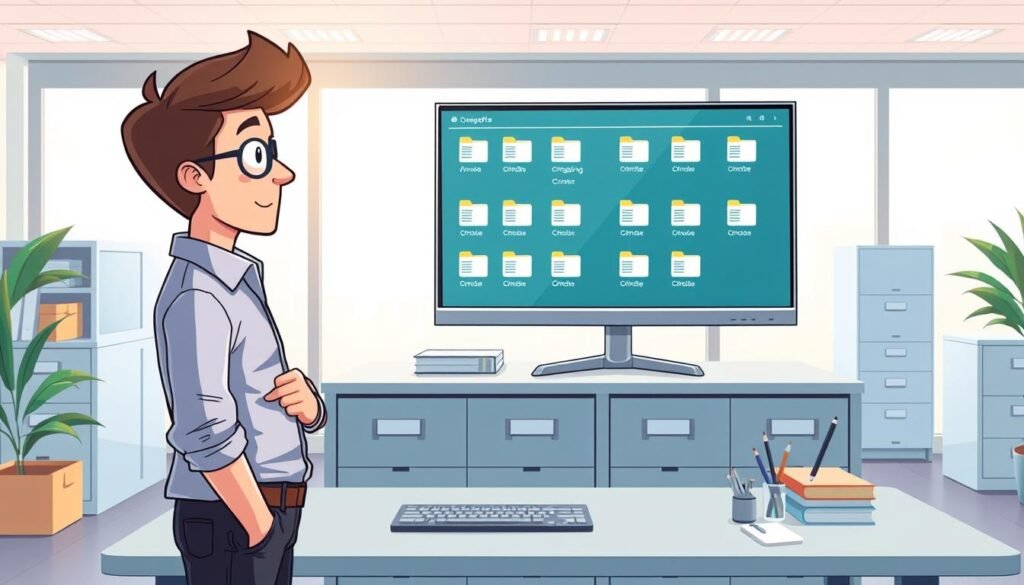
A robust framework centralizes your essential documents. Everything lives in one logical place. You stop wasting mental energy remembering where you saved things.
Your team gains clarity, too. Shared folders are easy to navigate. Project data becomes instantly accessible to everyone who needs it. This cuts down on confusion and delays.
How the System Aligns with Modern Work Trends
Today’s business environment demands agility. A unified approach supports that. It reduces friction in your daily tasks.
Collaboration flows more smoothly. You complete projects faster. This isn’t just about neatness. It’s about building a professional standard that fosters growth. Your entire operation gains stability.
Expert Tips for Decluttering Digital Files
Gabbie Rhodes offers a powerful starting point: see your storage with fresh eyes. Professional organizers like her provide the clear, compassionate guidance we often need. Their strategies turn an overwhelming task into a manageable, even liberating, process.
Assessing your current storage and file types
Begin with an honest audit. Look at where your materials currently live. Identify the specific types of items you’re managing—are they documents, images, or spreadsheets?
Ask yourself two key questions: Who else needs to access these files? Also, notice any patterns in how you’ve been naming them. This assessment reveals the exact spots where your workflow falters.
Steps to eliminate unnecessary files
Deletion is your most powerful tool. Start by removing duplicates and old drafts. Having fewer items instantly makes the important ones easier to find.
This act cuts through the noise. It allows you to focus on your critical tasks. When you organize digital files with intention, you build a foundation for lasting clarity.
Creating a Logical Folder Structure
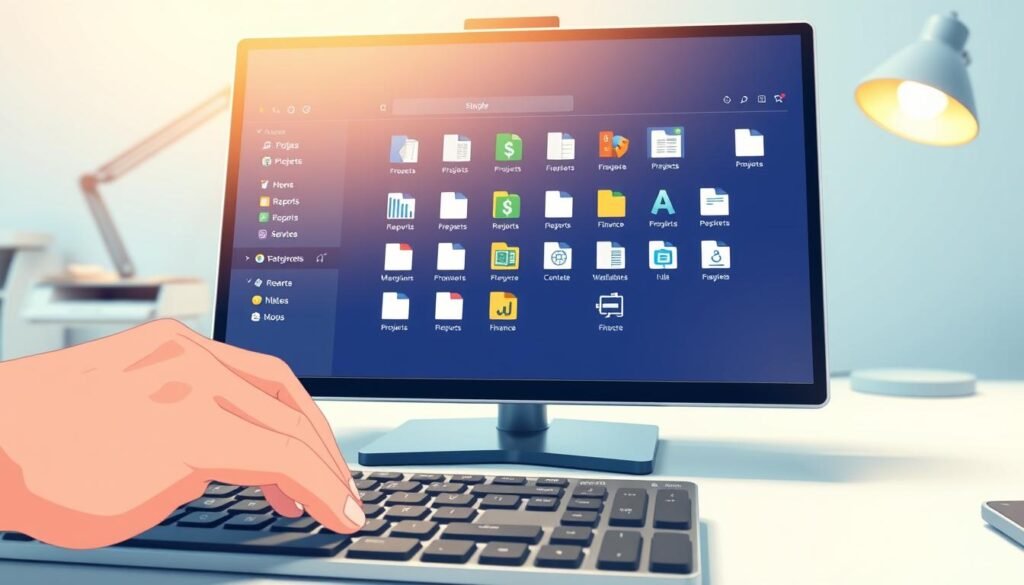
Your workflow transforms when everything has a designated, logical home. A clear structure isn’t about rigid rules. It’s about creating intuitive paths through your materials.
Shawn Lemon from The Digital Organizer sees this daily. He notes, “Grouping items by departments and core projects makes navigation effortless for your entire team.” This approach builds a shared understanding.
Organizing by department, project, or client
Start by choosing your primary lens. Does your work revolve around internal teams, specific initiatives, or external partners? Your answer defines your top-level folder.
For a client-based approach, create a main folder named after the client. Inside, add subfolders for contracts, data, and final reports. Everything for that relationship lives in one place.
Managing a large project? A dedicated parent folder holds all related drafts, research, and communications. This keeps the project timeline clean and accessible.
This logical grouping slashes your search time. You stop digging through endless, unorganized folders. Instead, you go directly to the right spot. It’s a simple shift with powerful results.
Naming Conventions: Best Practices to Save Time
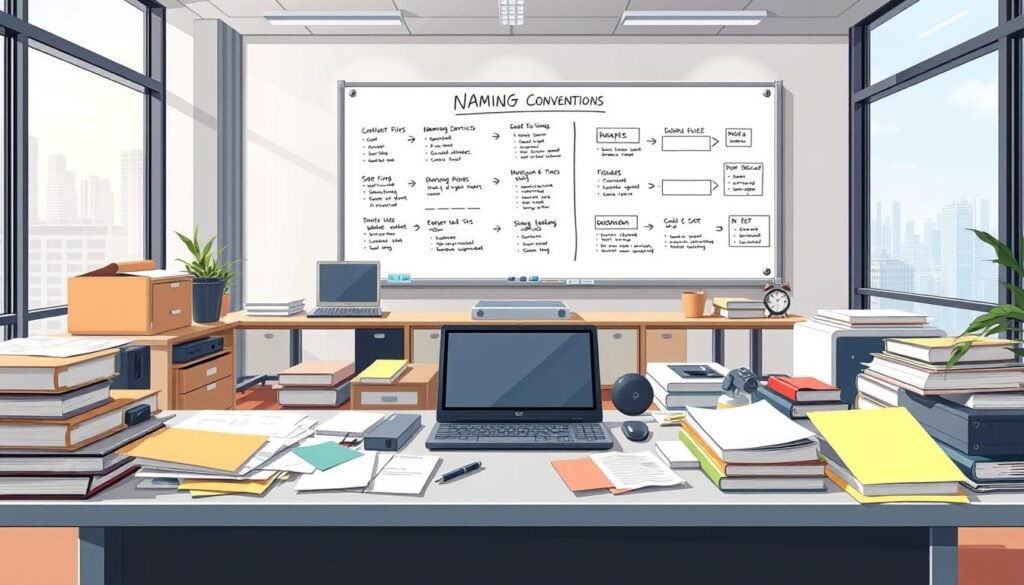
A clear name is a promise you make to your future self. It’s the difference between a frantic search and instant access. Professional organizer Gabbie Rhodes sees this daily. Her simple advice can transform how you work.
She notes that labeling a satellite image “Jan 2024 – Seattle, Washington” makes it easy to find. This principle applies to all your materials. Good naming conventions are lifesavers.
Using dates and descriptive phrases
Start with a logical order. Place the date first, in YYYY-MM-DD format. This automatically keeps your files in chronological order. Follow it with a specific description.
Think “Client Proposal” versus “Acme Co – Q2 Marketing Proposal Draft.” The second name tells the whole story. You know the what, who, and when at a glance.
Maintaining consistency across files
The real magic happens when you stick to your rules. Pick a format that’s easy to remember. Use it for every single item you save.
This consistency turns your search bar into a powerful tool. You can type a keyword or date and find exactly what you need. It stops the endless hunting through folders.
You reclaim your time and focus. Your naming strategy becomes a quiet force for calm in your day.
Regular Auditing and File Archiving Strategies
Judith Guertin offers a vital reminder: your important materials deserve a safety net. She advises relying on proven backup methods, like the 3-2-1 strategy. This means having three copies of your data, on two different media, with one stored off-site.
It’s your guard against total meltdown. You deserve that peace of mind.
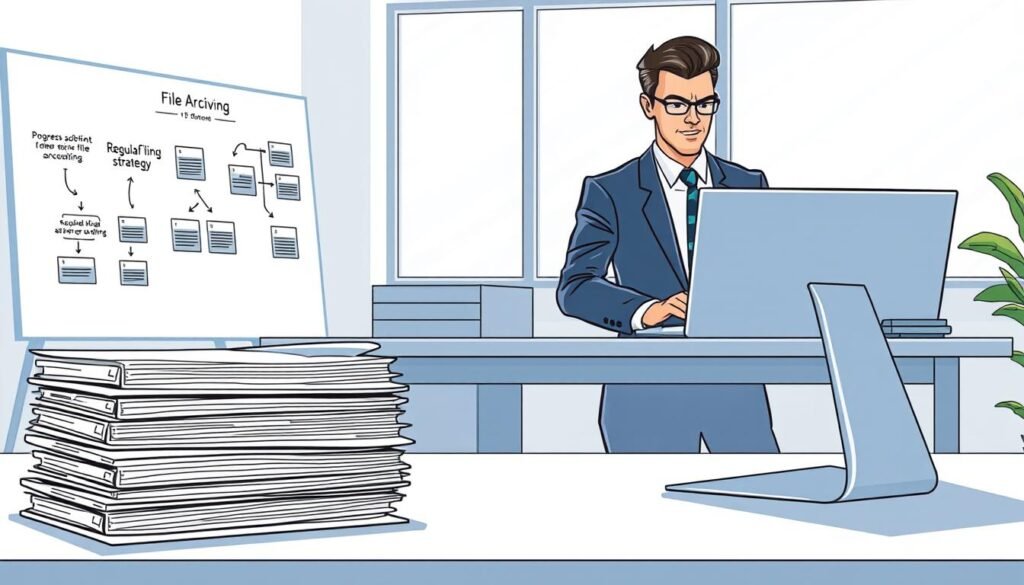
Regular audits of your files keep your active folders clutter-free. Schedule a monthly review. Delete what’s outdated and move completed projects to an archive.
This simple habit maintains your focus. It cuts through the unnecessary digital noise.
Archiving old work ensures your current storage is optimized for today’s tasks. Your system stays fast and functional. Think of it like cleaning a physical desk.
By moving files you no longer need daily, you build an environment that supports your long-term goals. This ongoing organization is the bedrock of sustained productivity.
Integrating Digital Tools to Enhance Workflow
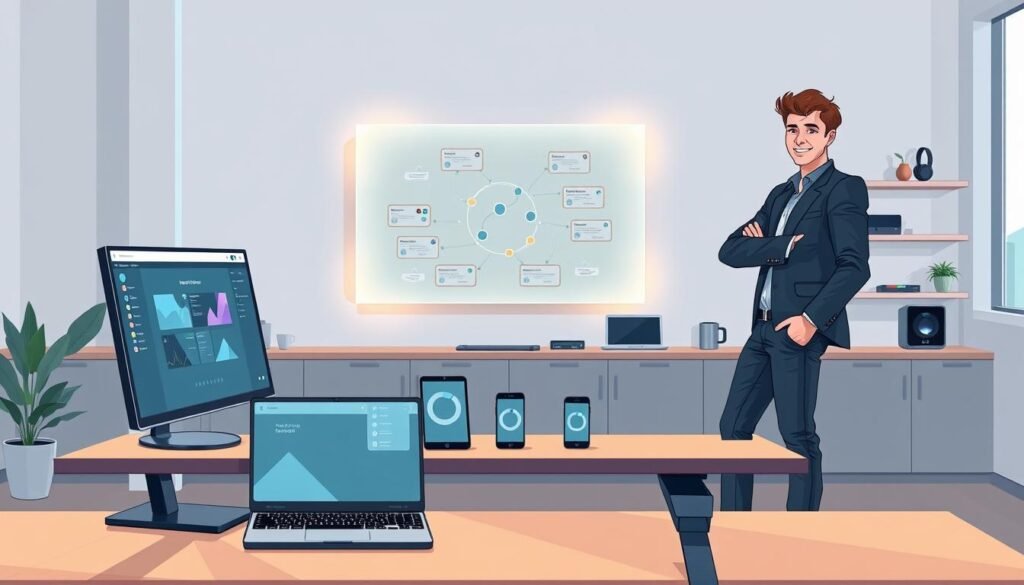
Imagine your team instantly finding every document they need, without a single email asking you for it. This isn’t a fantasy. It’s the reality when you integrate the right software into your daily routine.
These platforms bridge gaps. They turn isolated work into smooth collaboration.
Tools for seamless file access and sharing
Brian Nelson-Palmer, a trainer of Productivity Gladiators, highlights a common trap. Important materials get stuck on one person’s hard drive. His suggestion? Use platforms like SharePoint.
They create a central hub for your team. Everyone gets the access they require. This eliminates the frustrating “send me that file” loop.
For visual data, tools like Grapher offer powerful solutions. You can use their 14-day free trial to test it. Combine multiple charts into one, clear multi-page document.
This is a game-changer for any project. It saves you time and reduces confusion. Your most important files are consolidated and easy to share.
When you choose the right tools, you build a foundation for clarity. Your team operates with confidence. They have the information needed to move forward without delay.
The Impact of AI on Digital Organization
What if you could ask your computer a question and have it find the exact answer, buried deep in a folder you forgot existed? This is the new reality. Artificial intelligence is becoming a powerful ally in creating a calm, intuitive workspace.

These tools don’t just look at titles. They understand the content inside your materials. This changes everything.
Leveraging AI search and indexing capabilities
Intelligent platforms index all your text. They grasp context and meaning. You can search in natural language, as if you’re talking to a colleague.
Instead of remembering exact filenames, you describe what you need. The system finds relevant excerpts across all your documents in moments.
Real-world examples from experts
Brian Nelson-Palmer uses Gemini in Google Drive for this. He finds specific data inside his files in seconds. Platforms like Magi.ai and Microsoft Loop are reshaping our entire approach.
They move us from manual sorting to intelligent assistance. Your organization becomes dynamic and responsive.
How AI can simplify file retrieval and management
The biggest win is reclaimed time. You stop the endless manual hunt. These intelligent assistants surface what you need, when you need it.
You spend less energy searching. You gain more capacity for your actual work. It’s a profound shift toward clarity.
Fostering a Culture of Organization in the Workplace
Your legacy at work isn’t just what you accomplish, but how you make it easier for others to succeed. This shift in thinking transforms neat personal habits into a powerful, shared advantage for your entire team.
Organized systems are about peace of mind and leaving a legacy of clarity.
That legacy is built by fostering a true culture of order. It means your colleagues know exactly how to maintain the structures you build together. You create a shared sense of responsibility for your common environment.
Communicate this clearly: these methods are designed to help people succeed, not to add extra work. Start with simple, shared rules everyone can follow.
- Involve your team in creating naming conventions.
- Schedule regular quick reviews to keep shared folders clean.
- Celebrate when someone finds something easily because of the system.
By prioritizing this organization, you empower your business to grow sustainably. Vital knowledge is never lost when someone moves on. You build a bedrock of calm that supports every person’s best work.
Conclusion
You’ve equipped yourself with a powerful blueprint for lasting order. The steps you now know turn an overwhelming mess into a calm command. Your workspace can finally support your best work.
By building a logical structure and using clear names, you make your materials instantly understandable. Everything has a home. You stop wasting precious time on frantic searches.
Remember to review your files often. Move old projects to archives. Use smart tools to handle different types of data. This keeps your system aligned with your current needs.
If questions arise, revisit these principles. They are your guide to maintaining clarity. Your important documents will always be within reach.
Start today. Transform that scattered feeling into focused productivity. You deserve the peace of mind that comes with true organization. Your path forward is clear.