 Mono Roso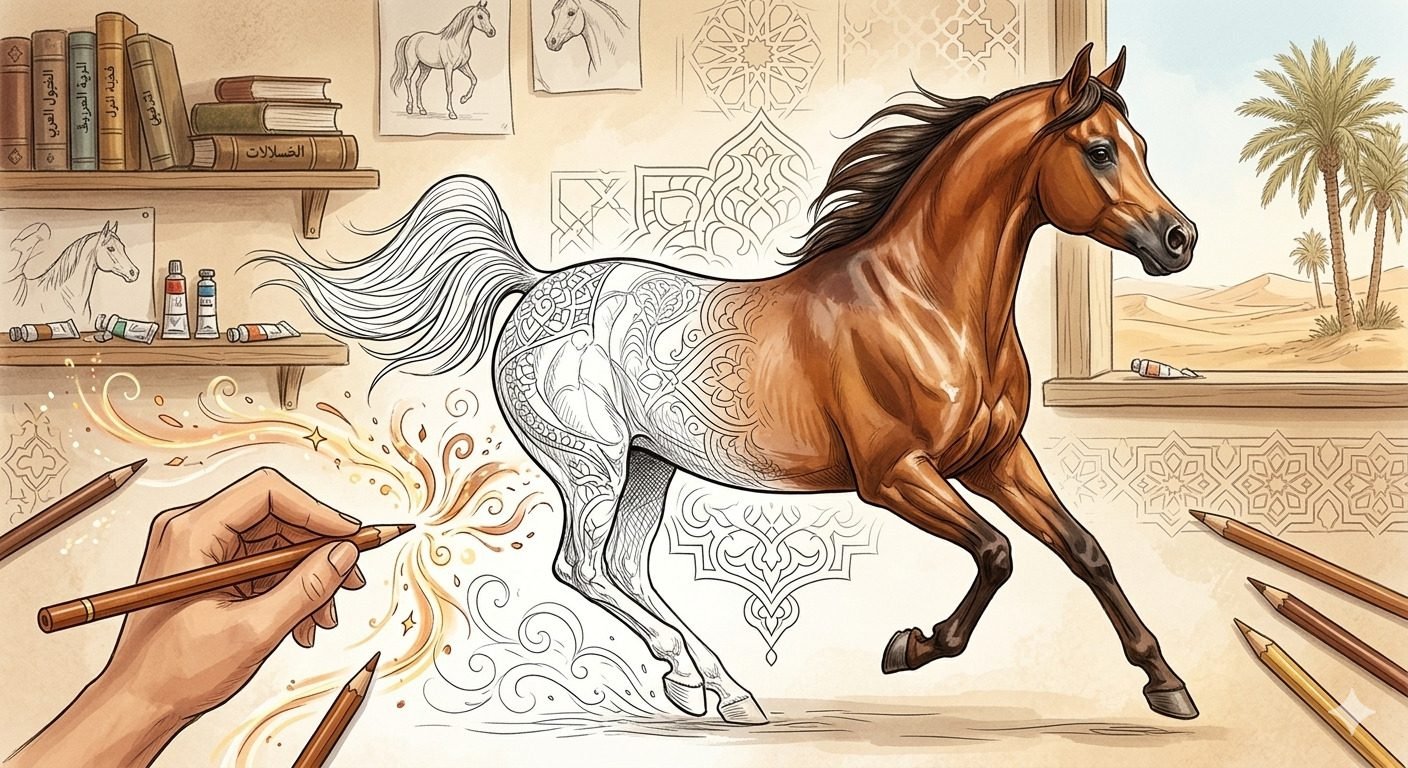
He sits in his studio, staring at a blank page. The pencil feels heavy in his hand. Days turn into weeks of the same routine. He feels like something vital has slipped away.
You might know this feeling too. It’s like your Art has become mechanical. The joy has drained out, leaving you feeling empty.
This guide offers a different path. By exploring Arabian horse art and horse breed coloring, you’ll find your creative spark again. These animals teach us about grace, movement, and presence.
When you focus on these breeds, something changes. The work becomes a meditation. Your hands move with purpose. The blank page invites you to create.
Key Takeaways
- Arabian horse art combines historical heritage with contemporary creative expression.
- Horse breed coloring requires understanding anatomy, movement, and natural pigmentation patterns.
- Coloring these subjects transforms stagnant routines into meditative, purposeful practice.
- Art becomes a tool for self-discovery when you engage with subjects that demand your full attention.
- Mastering these techniques rebuilds creative confidence and reconnects you to authentic expression.
- The journey inward through artistic practice mirrors the noble nature of these breeds.
The History and Heritage of Arabian Horses
Arabian horses have a rich history, spanning thousands of years of human care. Their story is not just about looks. It shows how cultures turned them into symbols of excellence and endurance.
Learning about Arabian horses can inspire your creative work. It connects your art to a rich heritage. This makes your creations more meaningful and grounded.
Ancient Origins of the Breed
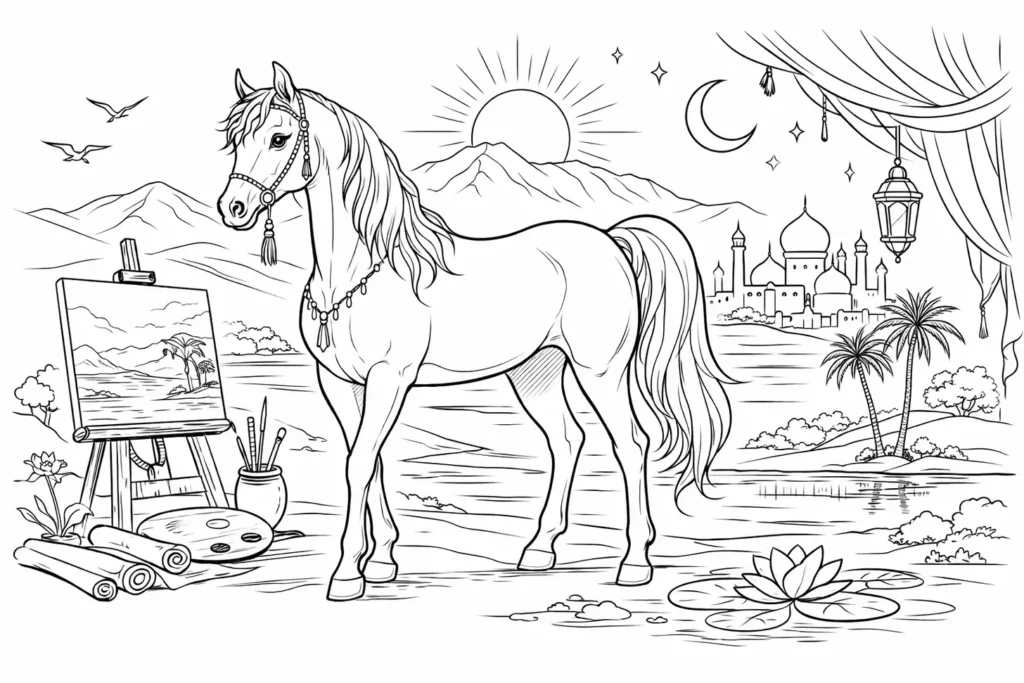
The Arabian breed started in the harsh deserts of the Arabian Peninsula. Bedouin tribes bred them for survival and loyalty. They needed horses that could handle extreme heat and long journeys.
This selective breeding made Arabian horses unique. They became known for their intelligence and resilience. Their looks and athletic ability showed the challenges of desert life.
- Developed in desert environments requiring extreme hardiness
- Selected for intelligence and quick decision-making abilities
- Bred to form strong bonds with their handlers
- Refined through centuries of careful family lineage tracking
Cultural Significance in Equestrian History
Arabian horses changed equestrian traditions everywhere. They were highly valued in Europe, Asia, and more. Their influence helped shape modern breeds and equestrian sports.
Their cultural impact is important for creators. Recognizing Arabian horses’ influence on other breeds shows the power of design. It reminds us that our choices matter and connect us to something bigger.
Horses have always stood for freedom and nobility. Arabian horses took this to new heights. They carried beauty and capability across deserts and oceans. This legacy inspires us to create with depth and purpose.
Exploring Horse Breed Coloring and Arabian Horse Art
You stand at a crossroads. The canvas before you is blank, waiting for your touch. When you start exploring horse breeds, something changes inside you. What was once routine becomes a deliberate act of creation.
Horses show amazing diversity in their coat patterns and colors. Learning about horse breed coloring opens up new artistic possibilities. Each color tells a unique story, from rich bays to striking grays and copper chestnuts.
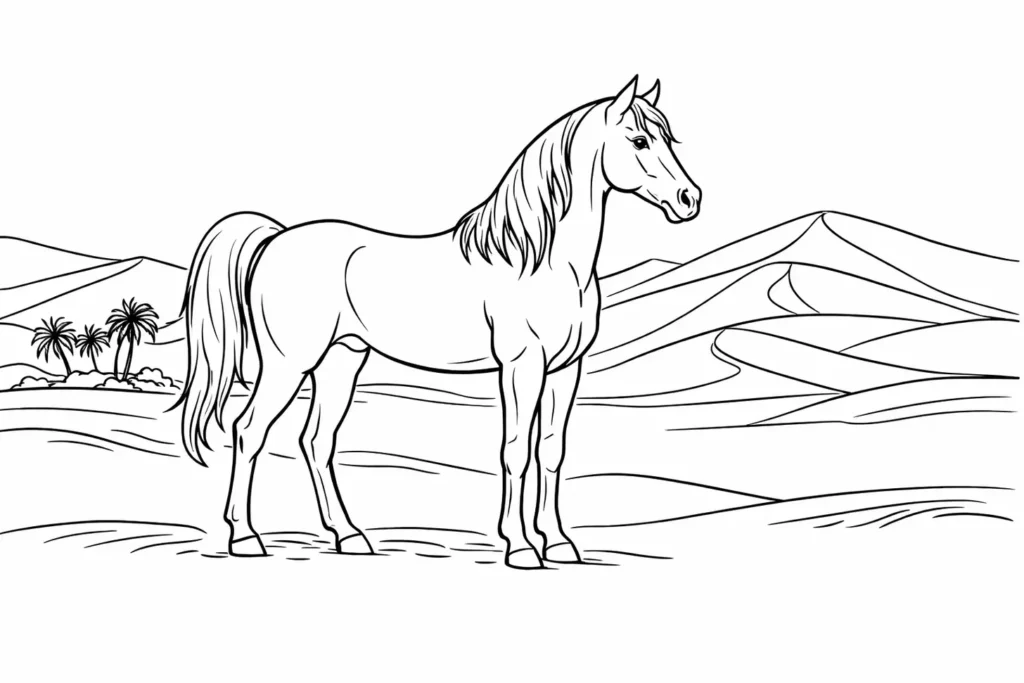
Think about what makes each breed special. Different breeds have unique colors that show their heritage and purpose. Arabians have their own special colors. When you dive into Arabian horse art, you’re not just copying. You’re unlocking your creative side.
Your approach to coloring should grow beyond just copying. Art needs purpose. Think about these things:
- Study the natural light patterns across muscle and bone
- Observe how shade shifts across different body regions
- Notice the unique markings that distinguish individual animals
- Explore how environmental lighting changes perceived colors
- Practice translating three-dimensional form onto flat surfaces
This is where transformation happens. By seeing each coloring session as a practice rather than a task, you move from simple observation to deep creativity. The world is a canvas, waiting for your touch.
Capturing the Natural Grace of Equestrian Subjects
Standing before a horse is truly remarkable. The muscles move like water. This teaches us what Art is all about. Your task is to bring this beauty to life on paper.
Drawing needs patience and keen observation. Watch how your subject moves. Notice every detail. This makes your sketches come alive.
Focusing on Fluid Movement
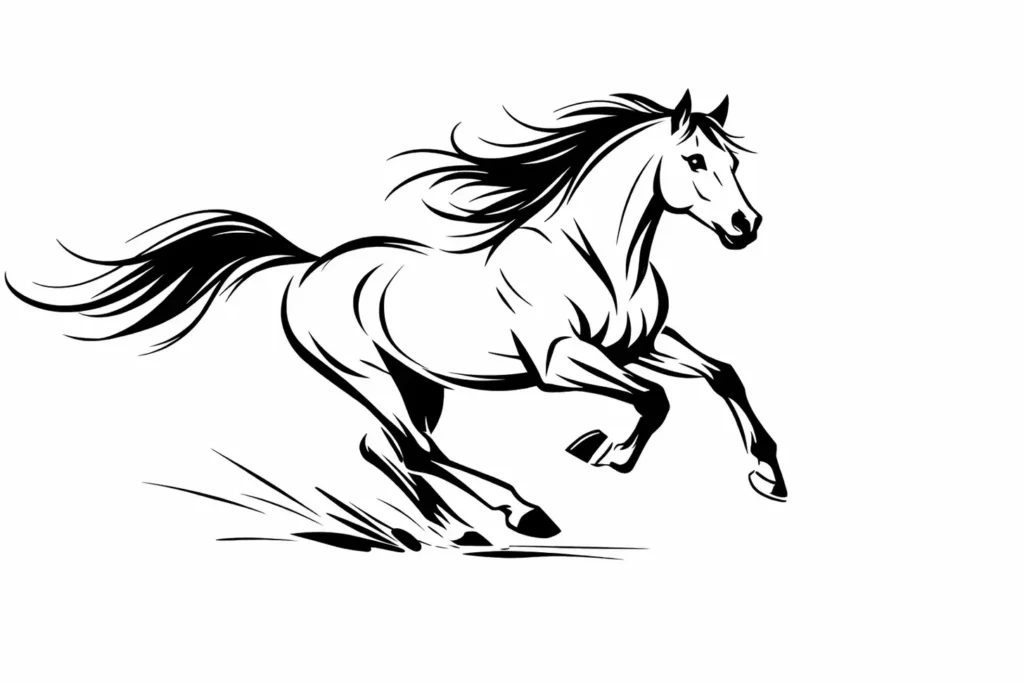
Movement is key in ArtArtn. Arabian horse moves with grace, unlike any other creature. Your drawings must show this flow.
To master fluid movement, focus on these elements:
- Study the arc of the neck as it extends and relaxes
- Watch how legs reach forward and pull back in rhythm
- Notice the spine’s curve during different gaits
- Observe how the tail responds to motion
Practice quick gesture drawings. These sketches help your eye spot patterns. The more you draw, the better you’ll get at capturing movement.
Highlighting Anatomical Elegance
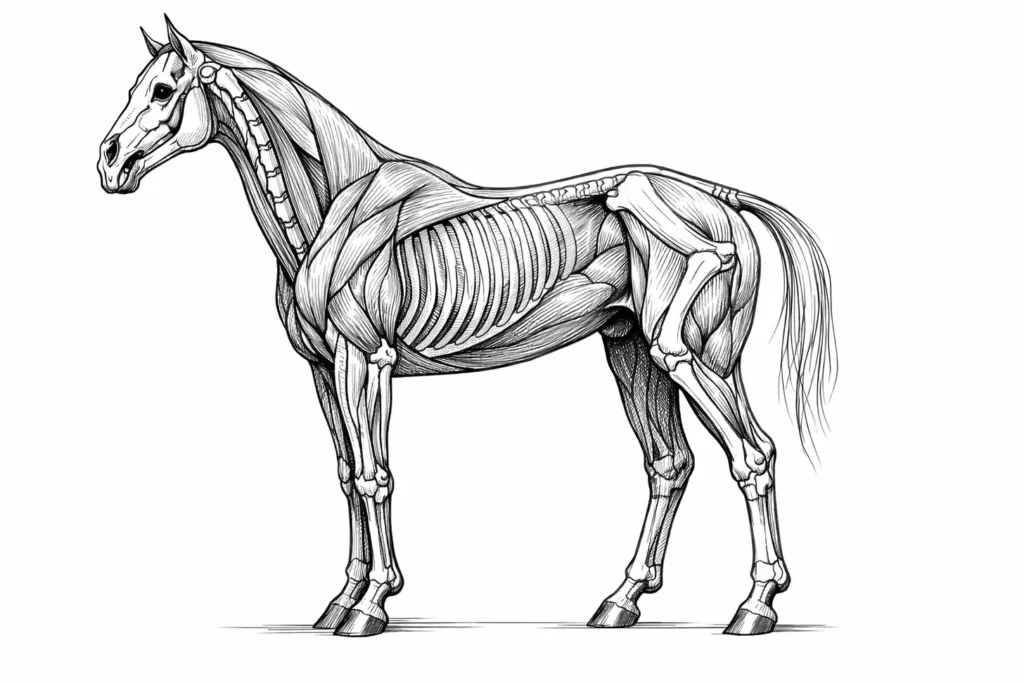
Equestrian subjects have amazing structure. An Arabian breed has unique proportions. Its bone structure, curved profile, and arched neck are all beautiful.
Your drawings should honor this anatomy:
- Study skeletal structure before adding muscle
- Learn how tendons and muscle groups interact
- Understand proportions specific to different breeds
- Practice rendering fine details that show elegance
Grace emerges when form and function align perfectly. This is what makes your drawings stand out. Your focus on anatomy is key to capturing elegance in your ArtArthen. You focus on both movement and structure; your drawings come to life. This shows your skill is growing. Your work starts to tell the truth about the Equestrian world.
Essential Techniques for Sketching Animals
Your first sketch will never be perfect. But that’s okay. It captures the spirit of your subject in a way that’s raw and true. When you sketch horses or animals, you’re not just recording what you see. You’re having a conversation with the living world.
The equestrian world often wants polished drawings. But the most honest work comes from letting go of those expectations. Watch animals with fresh eyes. Notice how light catches their form. Feel their movement’s rhythm. This approach grounds your practice in nature, not rules.
- Observe for longer than you draw—let your eyes learn before your hand moves.
- Use loose, flowing lines that follow the creature’s natural curves and energy.
- Block in basic shapes first—circles for joints, ovals for the body’s mass
- Draw from life whenever possible, not just photographs
- Accept imperfect lines as authentic marks, not mistakes
The magic happens when you move past technical accuracy toward intuitive creation. Your sketch doesn’t need to be photorealistic. It needs to be truthful. This changes how you approach your work.
When you draw animals this way, you’re not performing for the equestrian establishment. You’re creating something real.
Bringing the Color World of Horse Breeds to Life
When you start painting or drawing, something changes. The blank page becomes a mirror. You realize that choosing colors is more than just seeing them. A single color can change the whole mood of your art. This is true, even more so when working with horse breeds. Each color tells a story about the horse you’re drawing.
It all starts with observing. You notice how light affects a horse’s coat. You see the hidden details in what seems simple at first. This makes your art more meaningful.
Selecting the Perfect Palette
Choosing the right colors is key. When drawing Arabian horses or other breeds, pick colors that feel true to the animal. Look at what you’re really seeing, not just what you think.
- Study the natural tones in the coat
- Identify the undertones—warm, cool, or neutral
- Notice how light changes the coloring of animals
- Test your colors on scrap paper first
The Arabian breed teaches patience. These horses show small changes that need your full focus. You can’t rush this.
Layering Shades for Realistic Texture
Texture comes from layers. You build depth by adding lighter shades over darker ones. Then, add more depth again. This method works for all breeds, from spirited mustangs to refined Arabians.
- Apply your base color—the foundational tone.
- Add mid-tone shades to create dimension.
- Layer highlights where light naturally hits
- Use shadows to define muscle and movement
- Step back and assess your work honestly
Remember this: The journey of bringing these animals to life teaches you about yourself. As you focus on the colors, you gain clarity. The final image shows not just what you see, but who you’ve become through seeing.
Professional Tips for Enhancing Your Drawings
Small changes can make a big difference in your work. When you improve your sketch, you learn that precision is key. Every line and shape you add or remove changes the whole piece.
On your path to becoming better, you’ll see what makes a drawing come alive. The difference between a good and great piece is in the details. You’ll notice how light affects curves and how movement flows.
- Study the anatomical structure of your subject with genuine curiosity
- Build layers gradually, don’t rush details
- Step back often to check proportions and balance
- Use reference materials as guides, not limits
- Practice the same poses many times to understand the movement
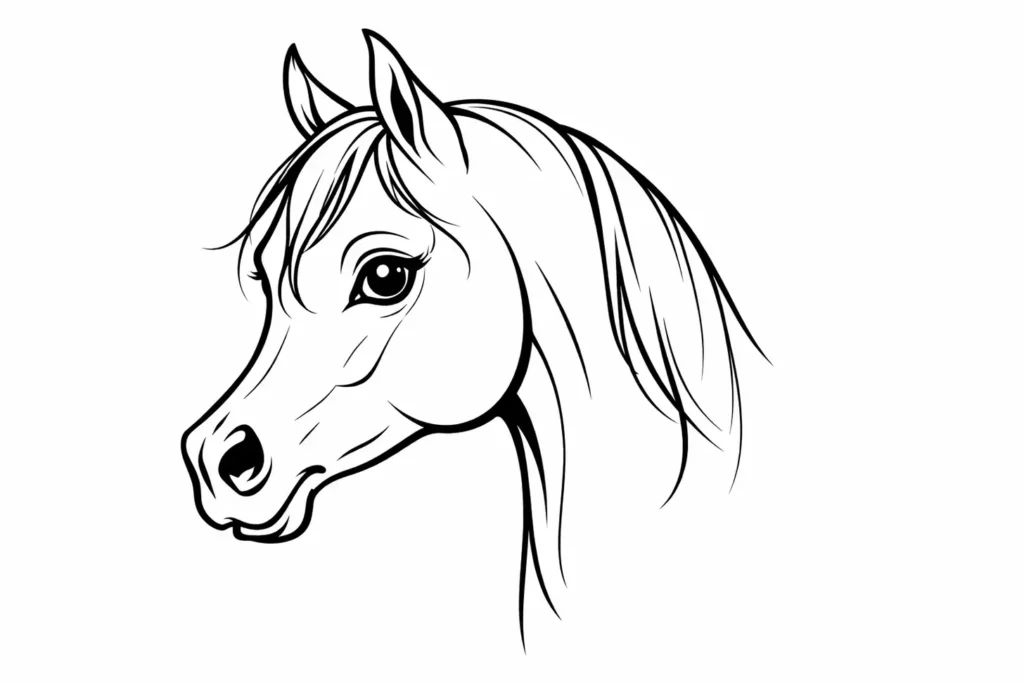
When drawing Arabian horses, focus on their grace. Notice the curves that show elegance and power. Your sketch is a mix of what you see and what you think.
Grace comes from discipline. You keep improving each part until it feels real. Your art will change as you keep these tips in mind. Your vision will show your growing skill and deeper understanding of your craft.
Conclusion
You’ve explored centuries of Arabian horse heritage. You’ve seen how these magnificent Breeds shaped equestrian culture. Their ancient origins show their noble spirit.
You’ve learned to capture their movement and anatomy. You’ve mastered shading and texture. Each lesson deepened your creative work, making it more real.
The Arabian horse teaches us about beauty and attention. It shows us that we should slow down and observe closely. Use these lessons in your daily creative work.
Remember, Artr art is a conversation with yourself. It helps you discover who you’re becoming. Your artistic practice is a journey of self-discovery.
You now face a choice: stagnation or creation with purpose. Let your awareness guide Artr art. Let the elegance of Arabian Horses inspire you. Artr art is a part of your life, taking shape before your eyes.