 Mono Roso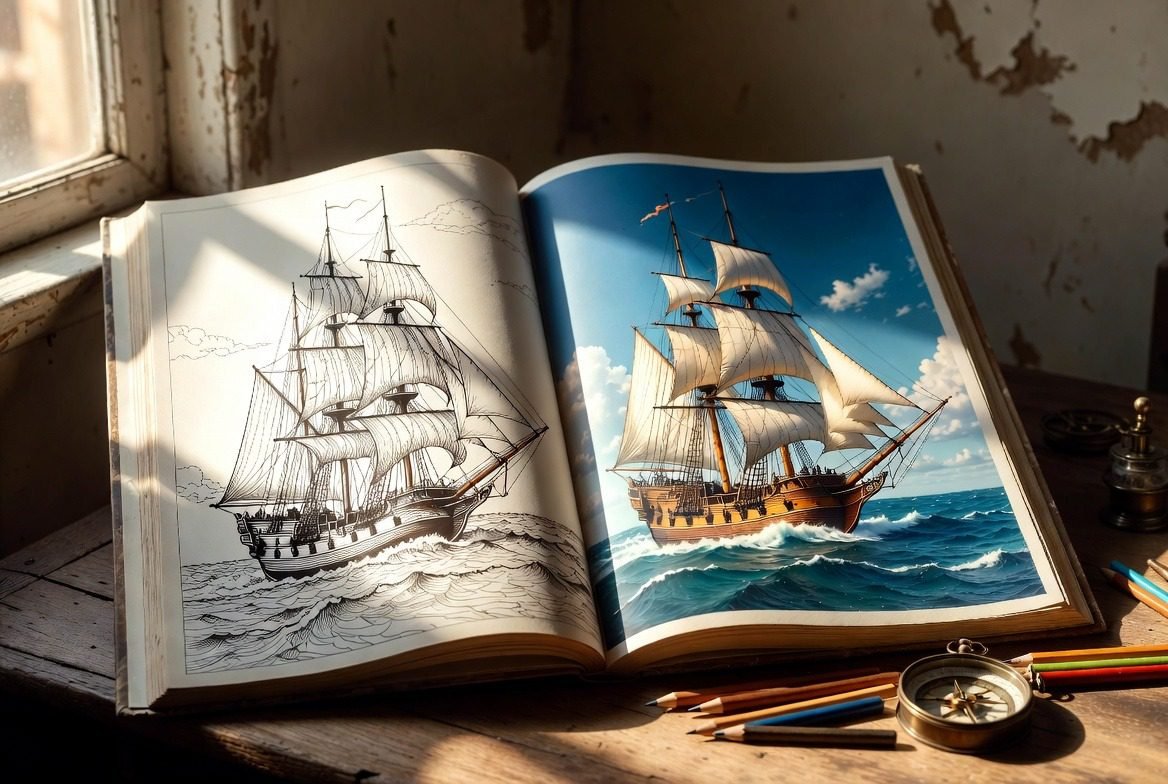
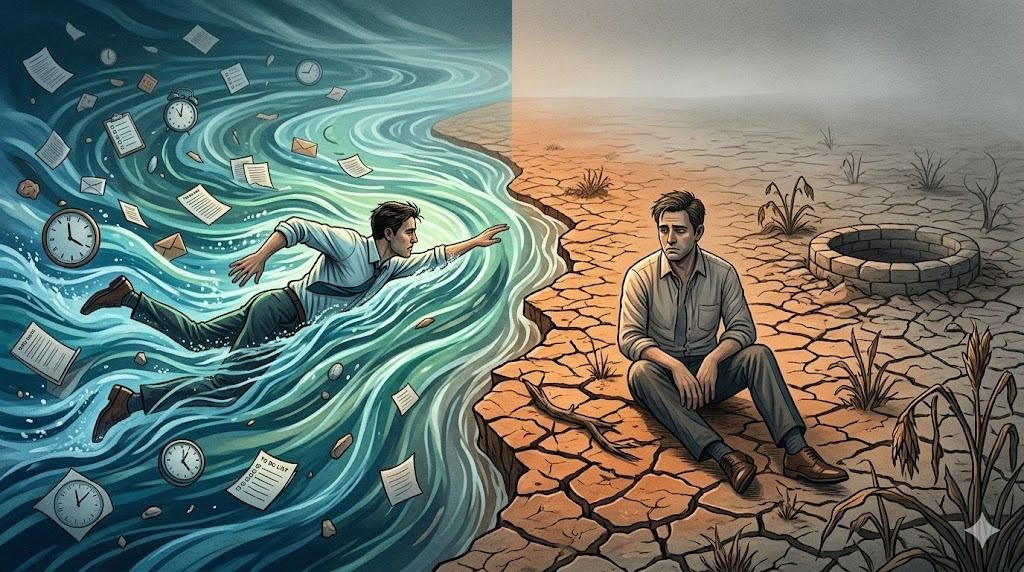
He stares at the glowing screen, his thumb flicking upward in a rhythmic, mindless motion. Another evening dissolves into a digital fog, leaving his mind feeling frayed. You know this quiet exhaustion—the sense that an endless stream of noise is harvesting your attention.
There is a different way to spend your precious hours. Engaging with maritime history art offers an unexpected remedy for a brain stuck on autopilot. It invites you to step away from the glare and into a world of wind, wood, and sailing.
Choosing an activity like coloring a sailing ship creates a deliberate pause in your day. You aren’t just filling in pages; you are navigating the deep sea of your own imagination. Tracing the lines of a vessel helps you reconnect with a sense of craft that technology can never replace.
The vast ocean once demanded absolute focus from every ship and sailor. By focusing on the art of coloring, you practice that same sharp mindfulness. Let the history of the sea guide your hand as you breathe life into these pages.
This content is a tool for reclaiming your vision, one ship at a time. Rediscover the sea through sailing and let these pages anchor your wandering mind.
Key Takeaways
- Reconnect with tactile creativity to break the cycle of digital burnout.
- Use marine illustrations as a meditative tool for better mental focus.
- Explore global heritage through the intricate details of historical vessels.
- Transform passive consumption into active, meaningful artistic expression.
- Appreciate the ancient craft of navigation and ship construction.
- Find a peaceful escape in the rhythmic nature of creative handiwork.
Discovering Maritime Heritage Through Art and Creativity
He often stares at the horizon, wondering how wooden vessels once survived the brutal whims of the open ocean. This connection to the sea speaks of the human spirit. You feel the lure of foreign places and the challenge of the deep.
The Romance of Seafaring in Visual Form
Marine art captures the grandeur of sailing vessels and the vastness of the water. It translates your desire to explore and face the raw nature of the deep. You don’t need a map to feel the pull of historical ships or the weight of past events.
The intricate design of a vessel tells a story of survival. It shows the Courage required to leave home for many days at a time.
Slowing Down with Historical Coloring Activities
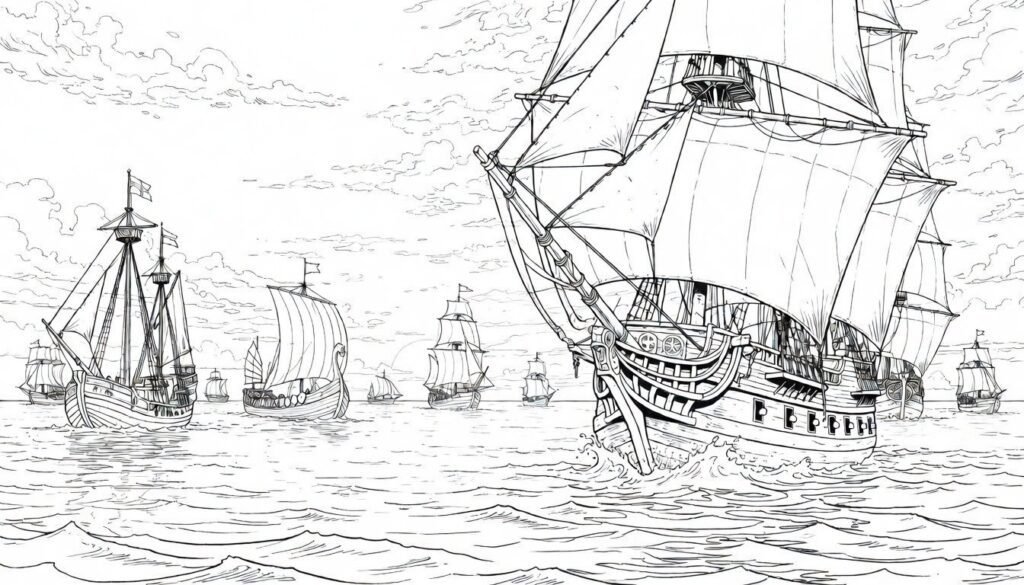
Engaging in a creative activity changes your focus. Choosing specific colors to fill in the lines of ships requires a different kind of attention. This isn’t just nostalgia for a lost time.
It is a way to find your presence again. Unlocking a portal into history feels transformative and deeply personal. This intentional craft demands a quality of attention that modern life rarely allows.
- It quiets the mental chatter of a burned-out mind.
- It builds a connection to craft rather than productivity.
- It creates a sense of being unhurried and present.
This practice helps you reconnect with sailing culture through art. It offers a quiet meditation that brings you closer to the rhythm of the sea.
The search for creative clarity often leads us to the sturdy hulls and complex rigging of the past. He finds himself staring at the wall, the weight of the week heavy on his shoulders. He needs a vessel to carry him away from the static of his daily grind. You might find that same relief when you pick up a pen and let a ship guide your hand across the paper.
Sailing Ship Coloring Books and Maritime History Art Resources
Finding the right artistic tools is the first step toward reclaiming your focus from a world that never stops talking. These resources serve as anchors, helping you transition from burnout to quiet, rhythmic creation.
Historic Sailing Ships Coloring Book Collections
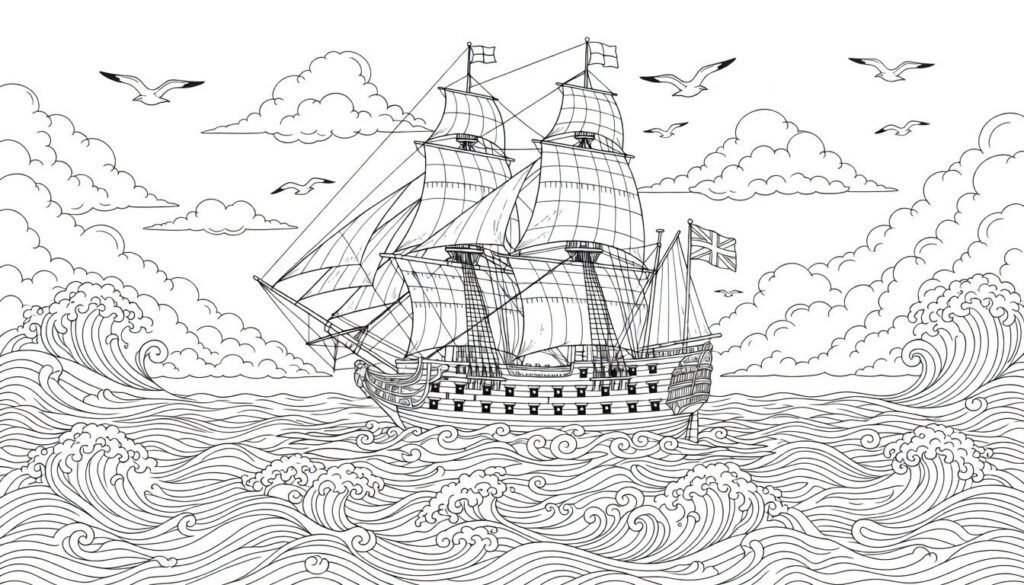
The Dover Publications historic sailing ships coloring book is more than a simple hobby for a quiet afternoon. These illustrations capture the architectural complexity of sailing ships that once ruled the horizon. Engaging with this history coloring resource lets you study sturdy hulls while your mind finally finds its center.
Free Printable Maritime History Art Pages
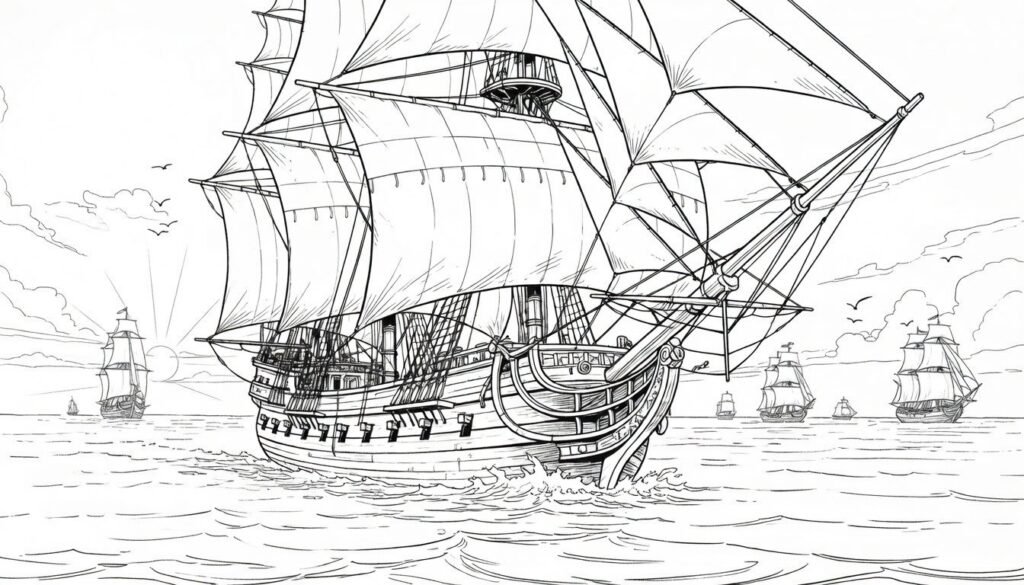
You can find printable sailing ship coloring pages tucked away in museum archives and digital libraries. These pages range from basic silhouettes to intricate designs that demand your full attention. When you print these pages, you are not just grabbing a page of content; you are claiming a moment of peace.
Digital and Physical Coloring Resources
Choosing between a physical book and a digital file depends entirely on what your nervous system needs right now. Some prefer the thick paper of a physical book, while others like to print a single page at a time for experimentation. This history-coloring practice creates a ritual space where sailing ships serve as tools for modern awareness, and the pages act as your personal map.
Educational Content for Children
The coloring resources designed for children are often the best entry point if you have forgotten how to play. These children-focused pages use bold lines that are forgiving to a tired mind. If you give children these pages, they learn history, but when you use them, you learn to breathe again among simple ships. Children find joy in the shapes, and these children-style designs allow you to create without the pressure of perfection.
Detailed Artwork for Adult Enthusiasts
For those seeking a deeper challenge, detailed artwork for adult enthusiasts offers ships with accurate rigging. These illustrations require you to focus on the small details of each specific ship. Coloring these sailing ships allows you to engage with authentic maritime craft, turning a blank ship into a vivid piece of your own history.
Exploring Global Maritime History Through Artwork
When you gaze at a vintage print of a sailing vessel, you aren’t just looking at wood and canvas; you are witnessing human willpower. These visual records allow you to step onto the deck of a 17th-century ship without ever leaving your room.
Every piece of artwork acts as a mirror, reflecting how we once challenged the vast ocean. By observing these images, you begin to see the details of a forgotten world.
Ancient Vessels: Triremes and Early Sea Trade
The trireme stands as a symbol of early human mastery over the sea. These narrowboats featured three banks of oars, enabling incredible speed during pivotal events in the Mediterranean.
When you study trireme illustrations, you see more than a ship. You see the coordination of a crew and the raw power required to navigate in an ancient age.
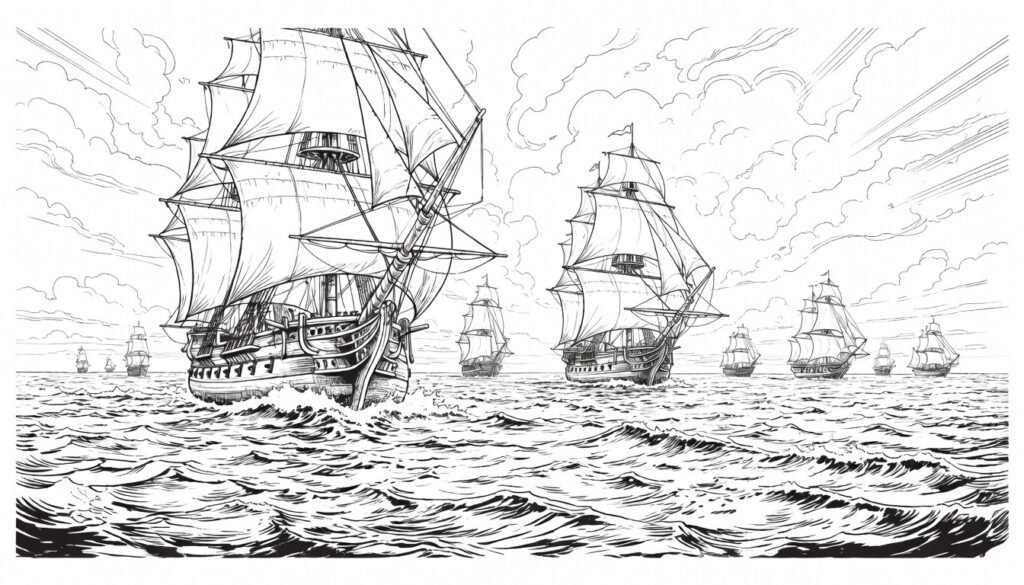
The Age of Sail: 17th and 18th Century Ships
The 17th and 18th centuries marked the peak of maritime complexity. Sailing ships during this age grew into massive, beautiful structures with intricate sail patterns and multiple masts.
Each line in a period artwork represents a hard-earned lesson learned on the open sea. These ships were the peak of engineering before steam took over the sailing world.
Historical Maritime Art Collections and Museums
Museums preserve the soul of water through carefully curated art collections. These pieces offer a window into history that books alone cannot provide.
“The details matter because they reflect actual ship construction, balancing historical accuracy with artistic beauty.”
California Historical Society Maritime Paintings
The California Historical Society holds rare colored paintings from circa 1700. These images show several sailing ships on the sea with other boats visible in the background.
You can access this history through Stanford and Calisphere. These ships are documented with such clarity that you can almost feel the salt spray through the artwork.
Marine Art as a Portal to History
Visual history makes abstract concepts feel concrete. You don’t just read about a 19th-century ship; you feel the weight of the water against the hull.
Focusing on a specific trireme or a merchant sail helps you notice things others miss. This attentiveness is exactly what fuels your own creative spirit.
Conclusion: Finding Clarity Through Creative Maritime Exploration
He once believed that every hour required a measurable output to be considered valuable. You started this journey looking for a sailing ship, but what you actually need is permission to slow down. In your overscheduled days, you deserve a contemplative activity that serves your creative energy. History coloring offers a rare escape with no metrics, providing the quiet satisfaction of completing a page with your own hands.
Whether you choose a simple sailing ship for children or a complex artwork, you are making a statement about what deserves your time. These ships once crossed the ocean; now, a sailing ship carries your focus and your need for tactile engagement. This activity connects you to human nature and the magnificent design of the maritime past.
This isn’t about mastering history or sailing techniques. A sailing ship helps you restore your vision through coloring. The ships on these pages remind us that humans once built grand things with sustained attention. Using your own colors, you honor historical events through an intentional focus on sailing.
Start with a sailing ship for children or a detailed ship. Use coloring to navigate the emotional sea. A sailing ship for children brings restorative ease. Pick a ship and sail away from the noise.
Give yourself a sailing ship for children to find peace. Let ships and the sea guide you to clarity. Explore artwork and the intricate design of a coloring book today. Navigate the sea and the pages with your presence during a coloring session. Use these pages with children to find calm and a ship for your soul.